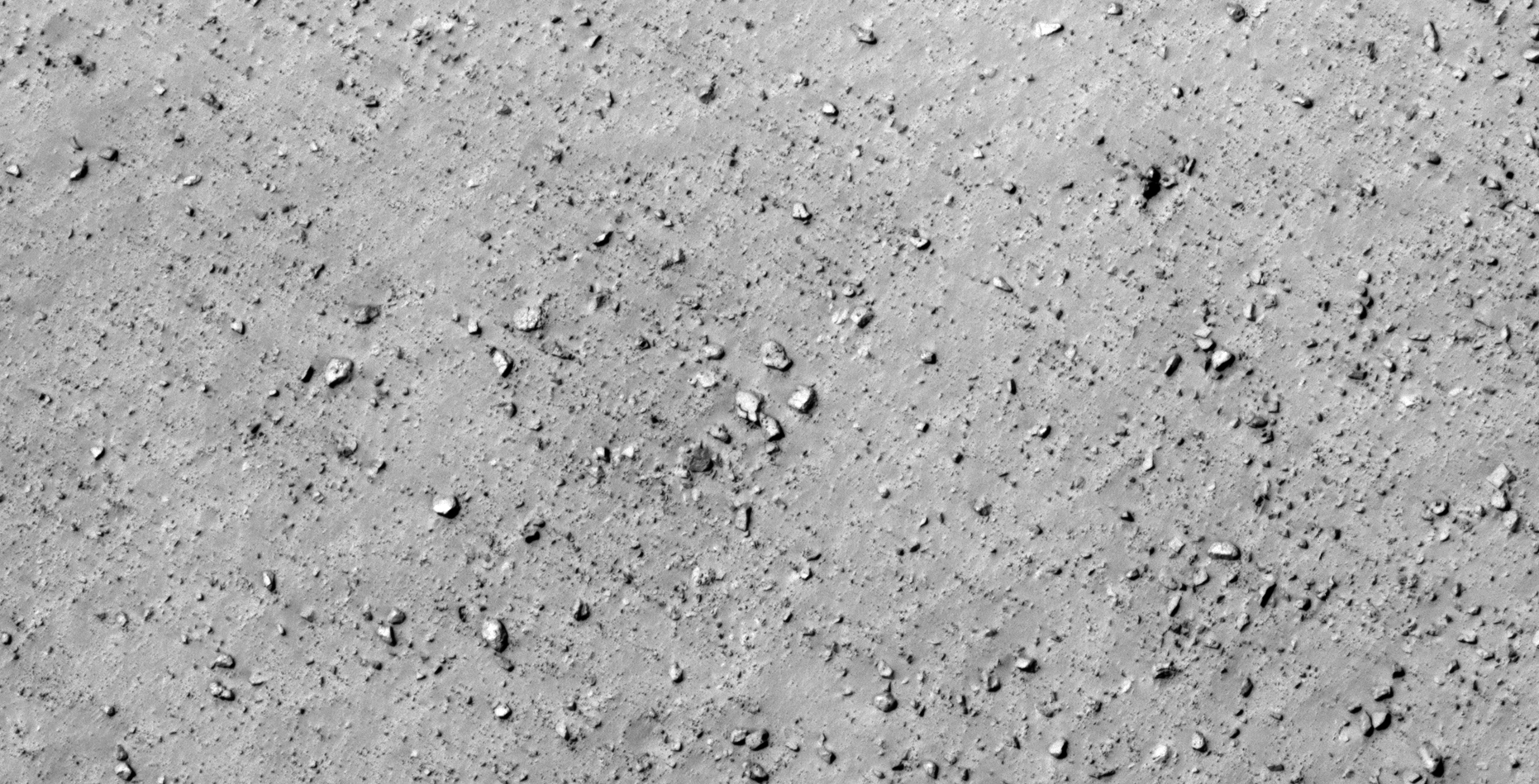
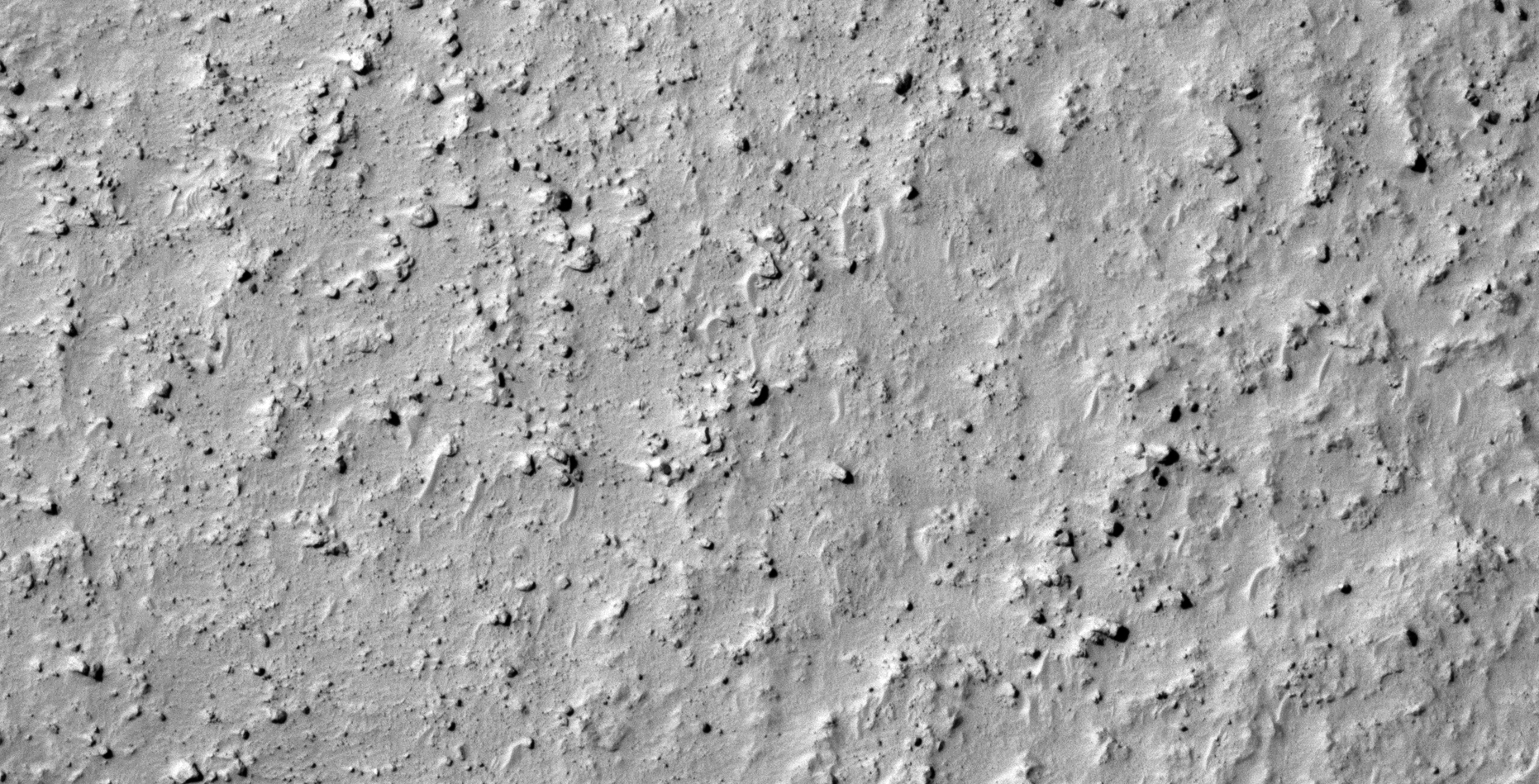
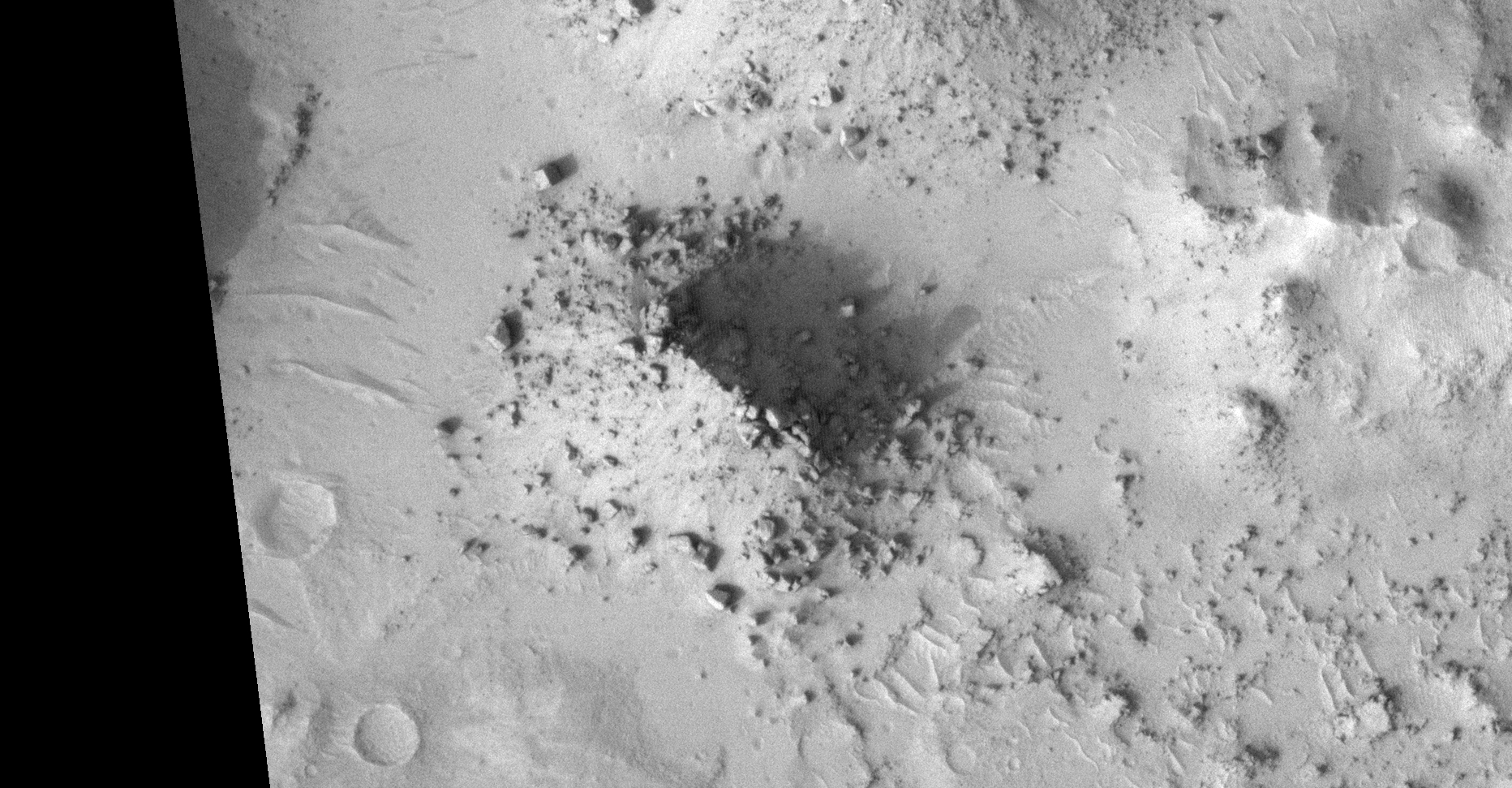
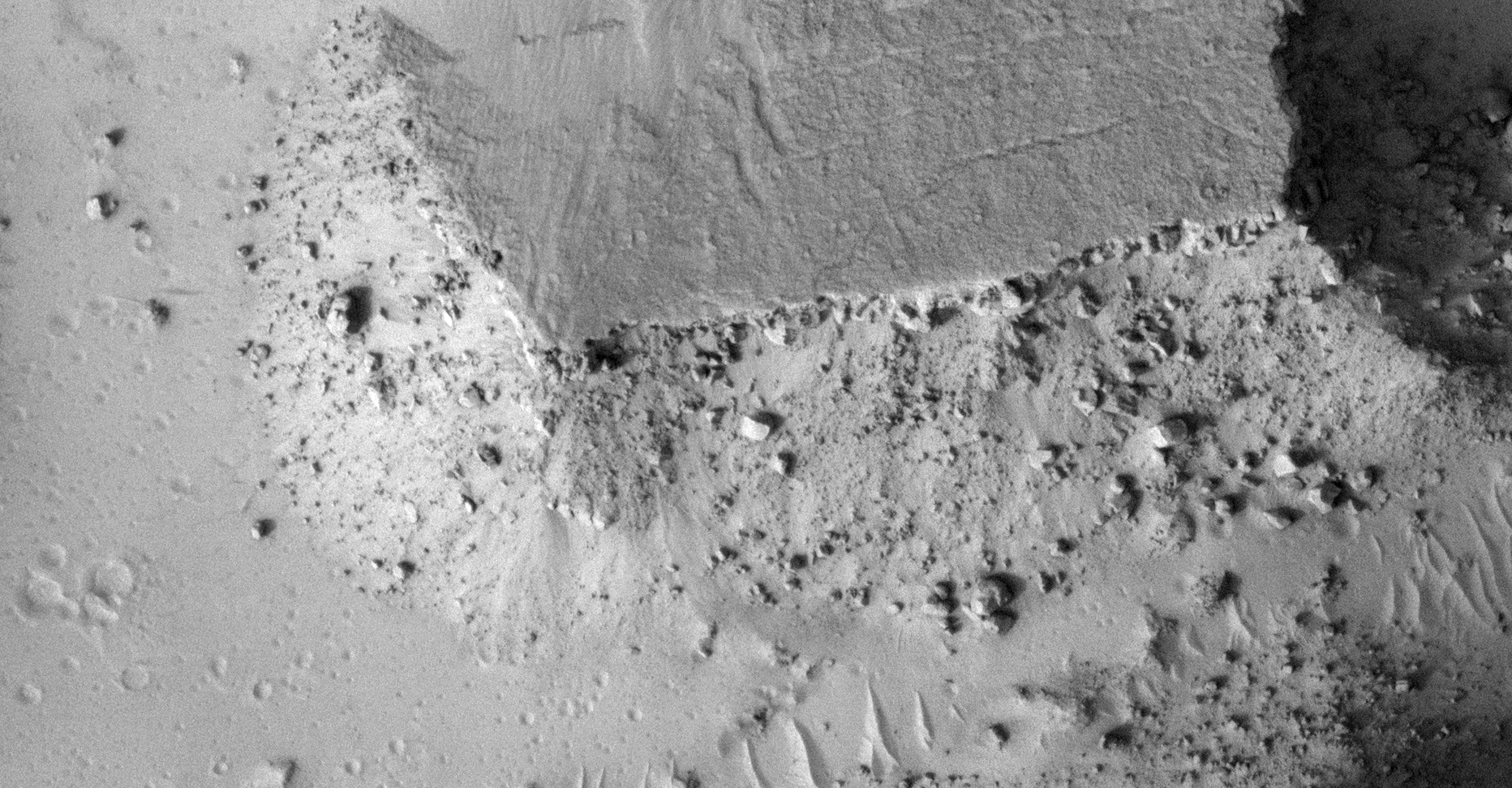
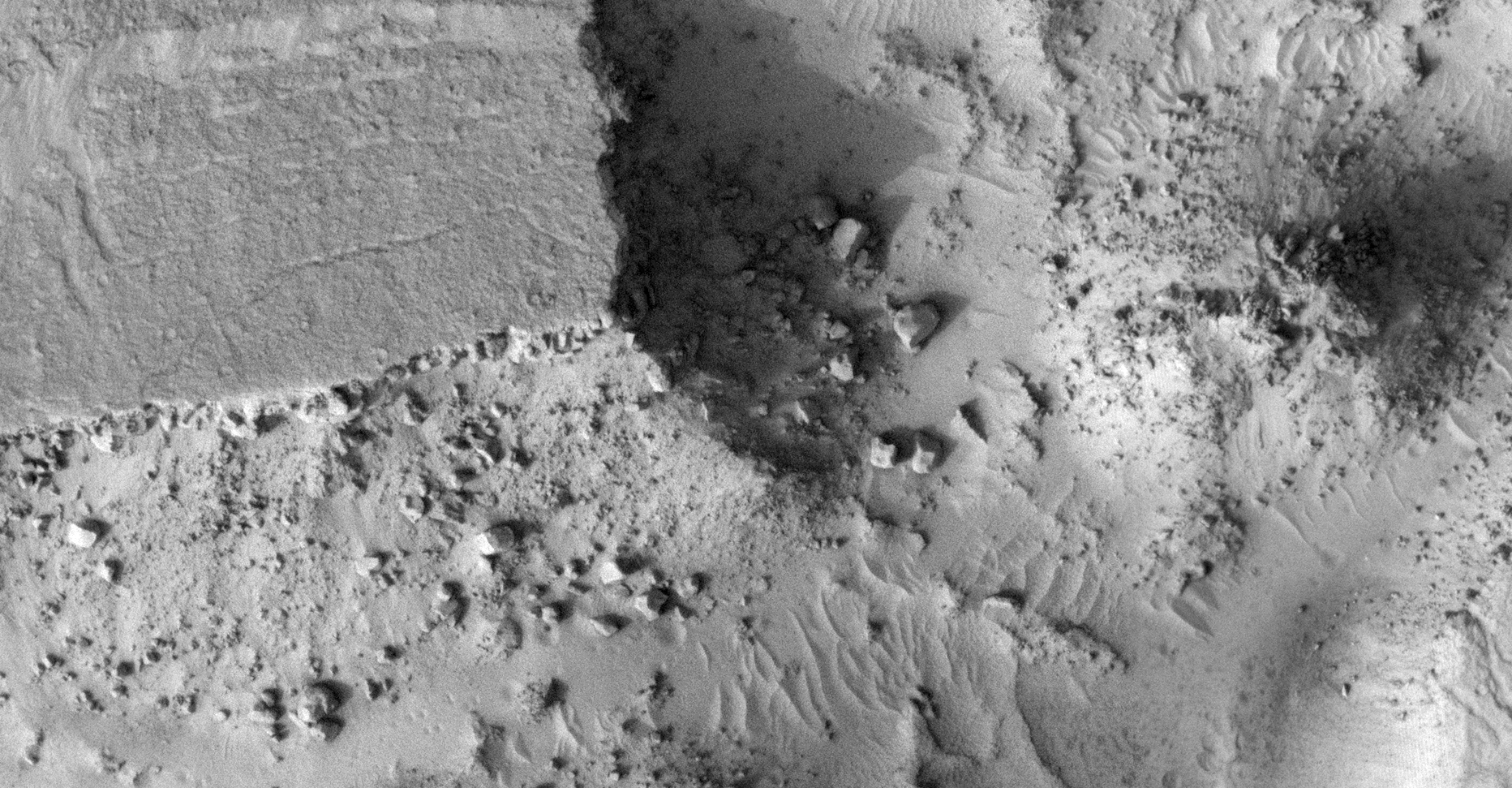
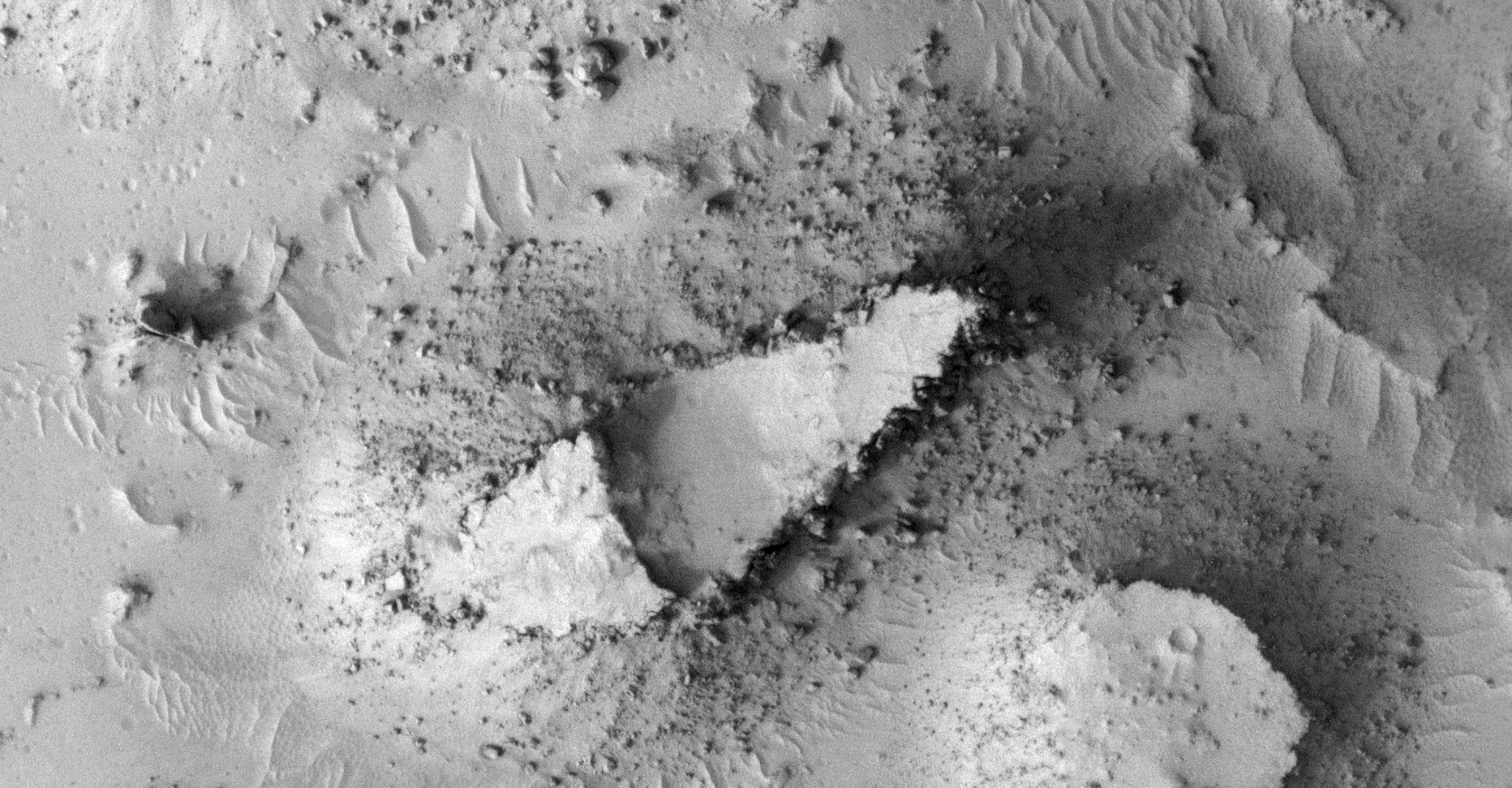
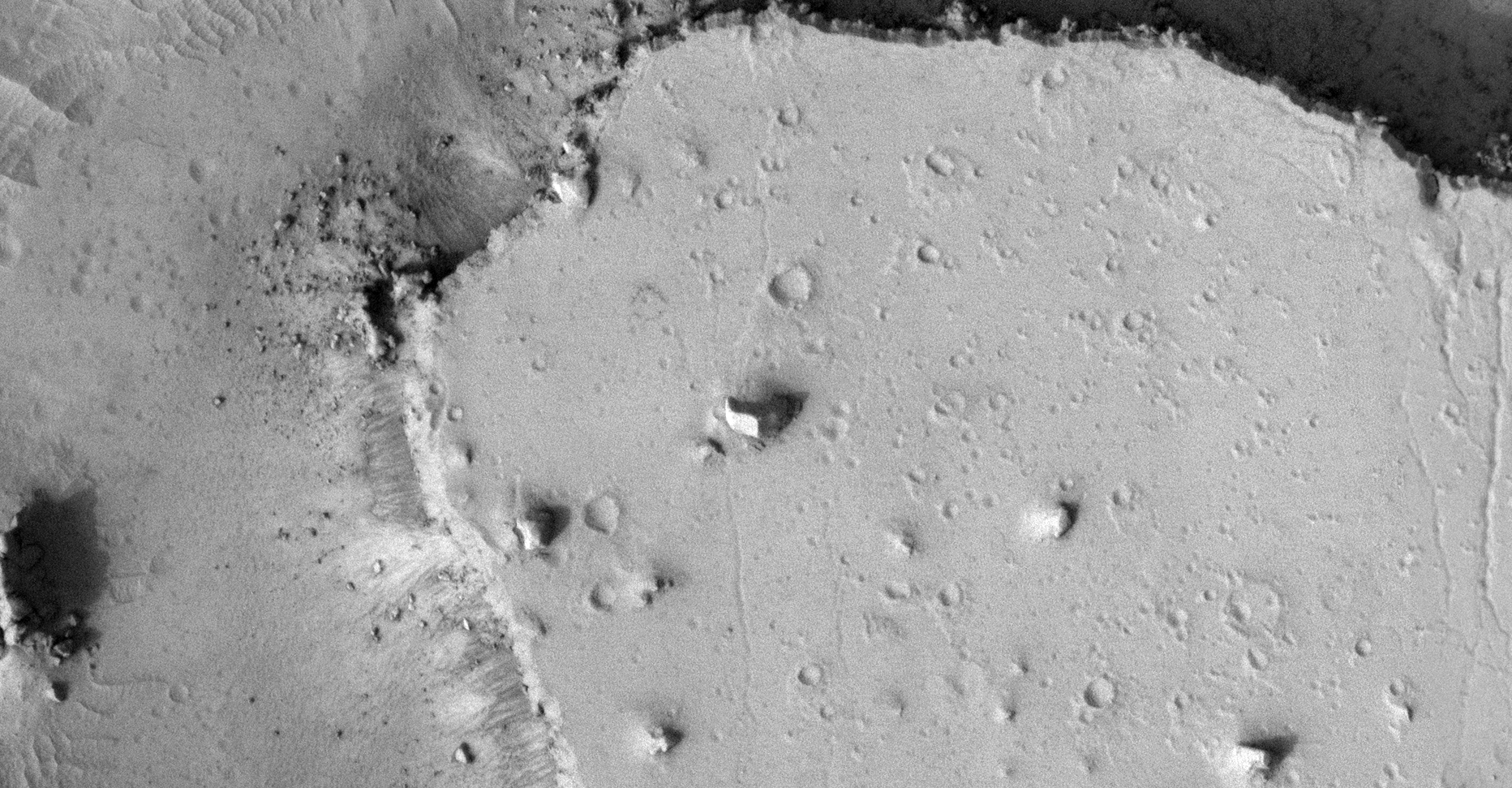
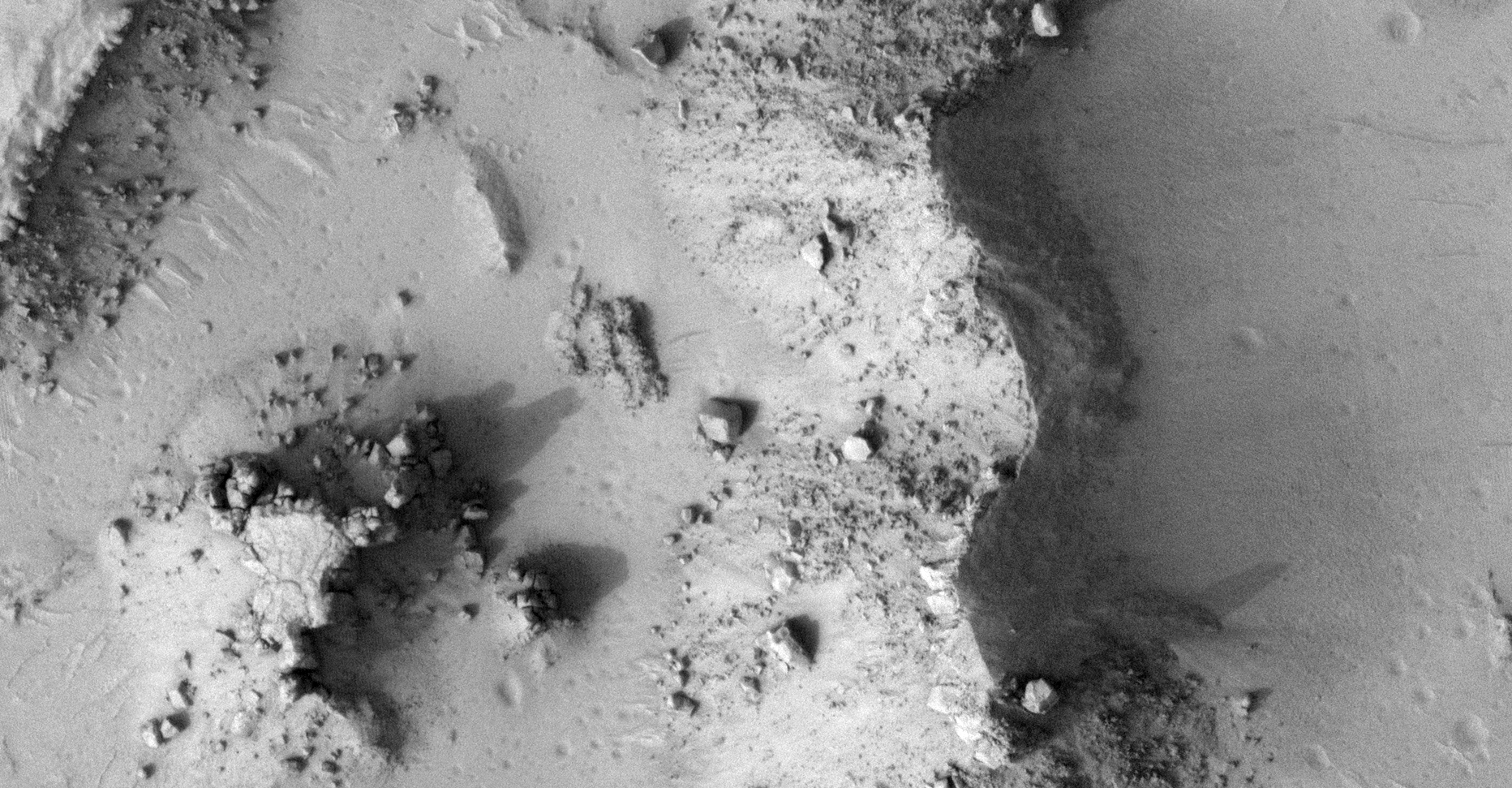
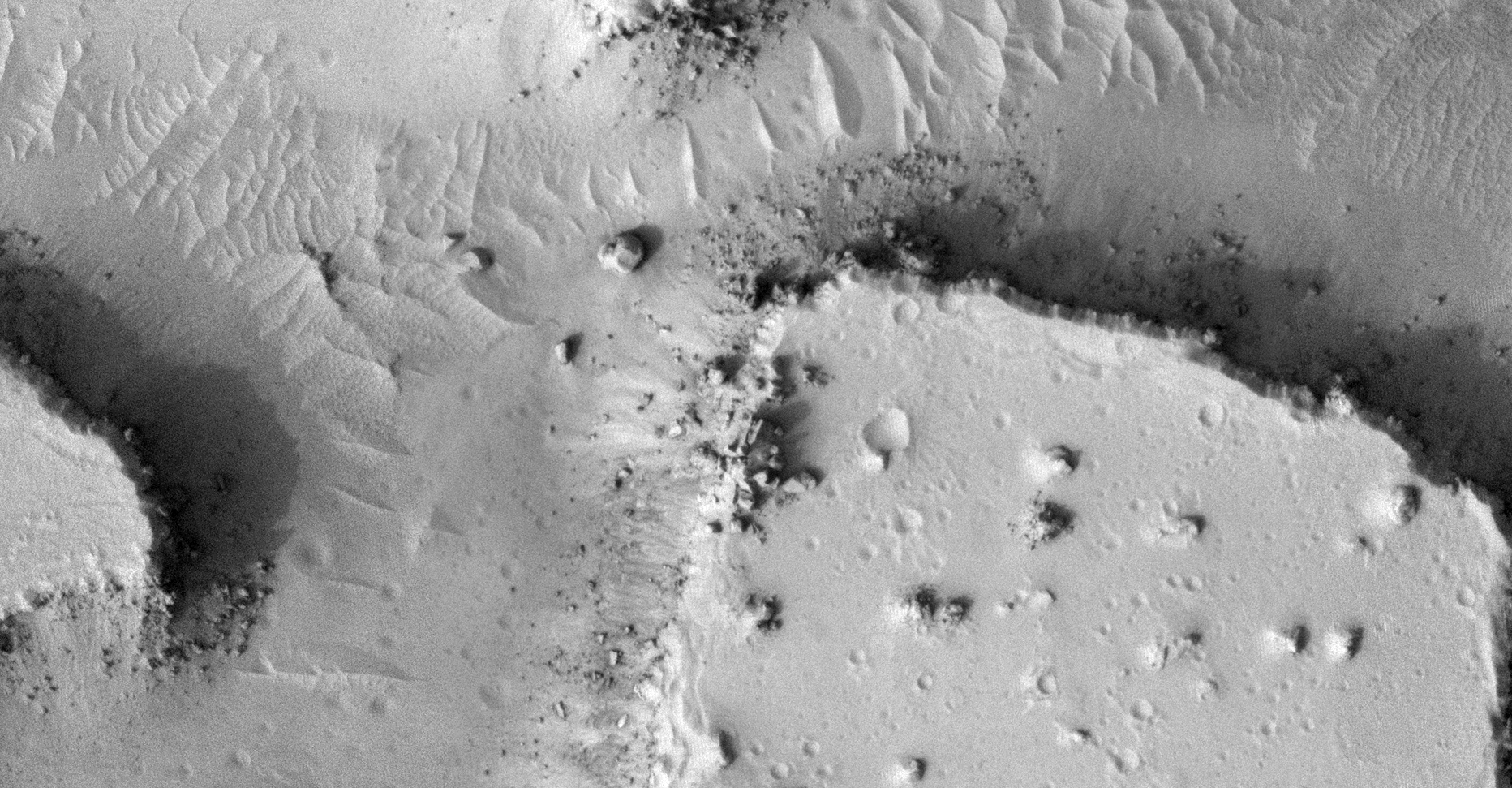
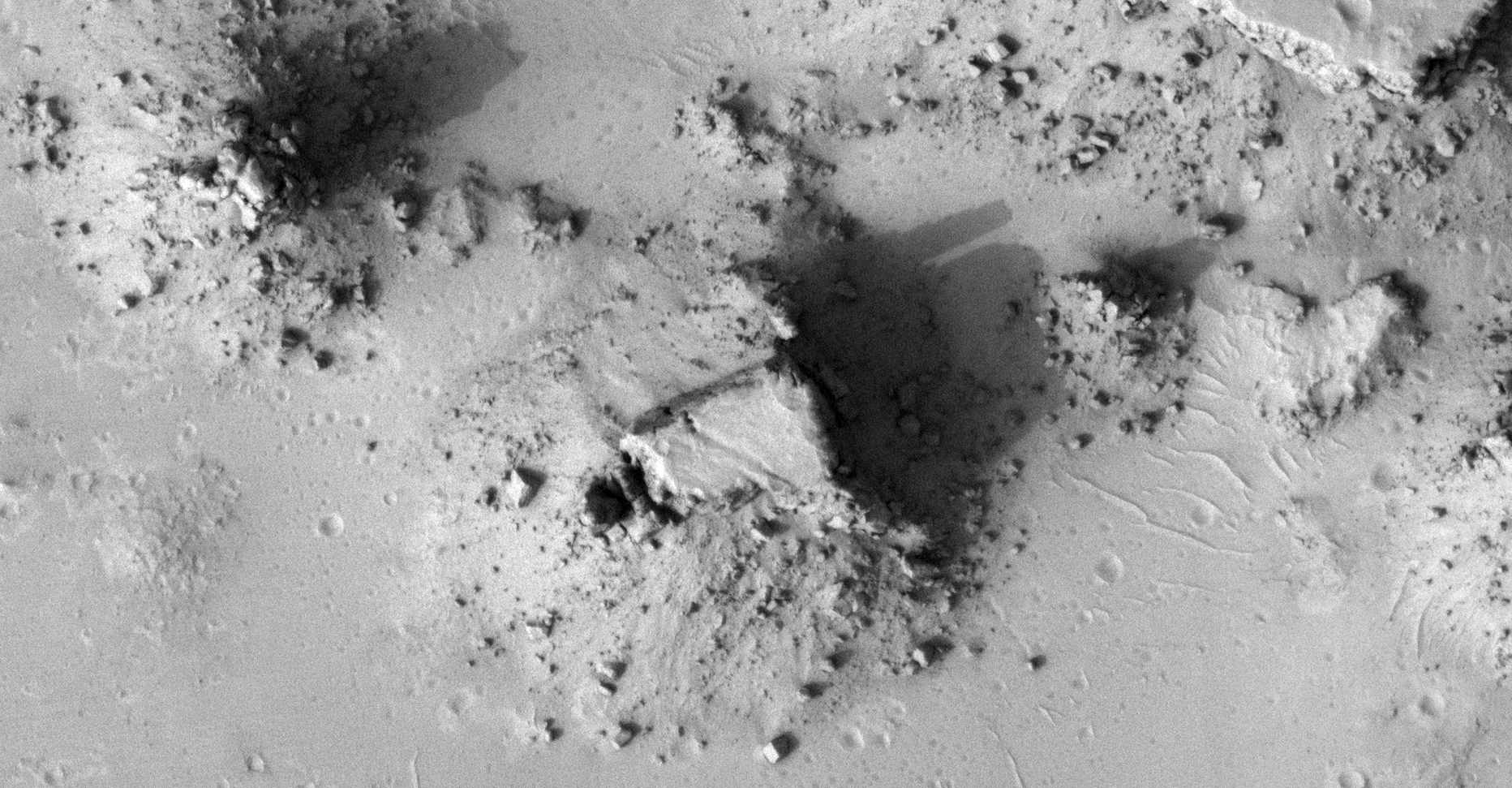
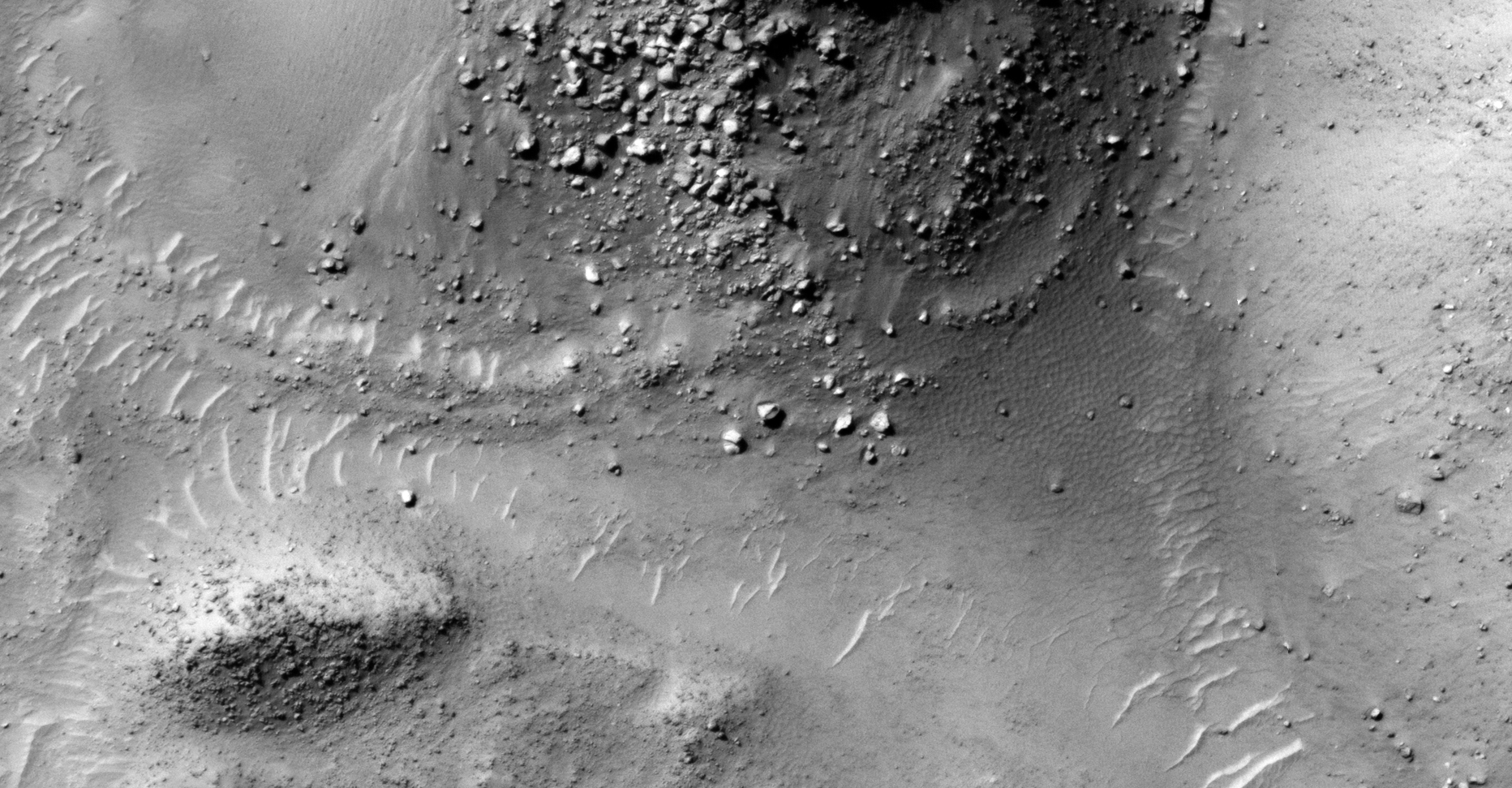
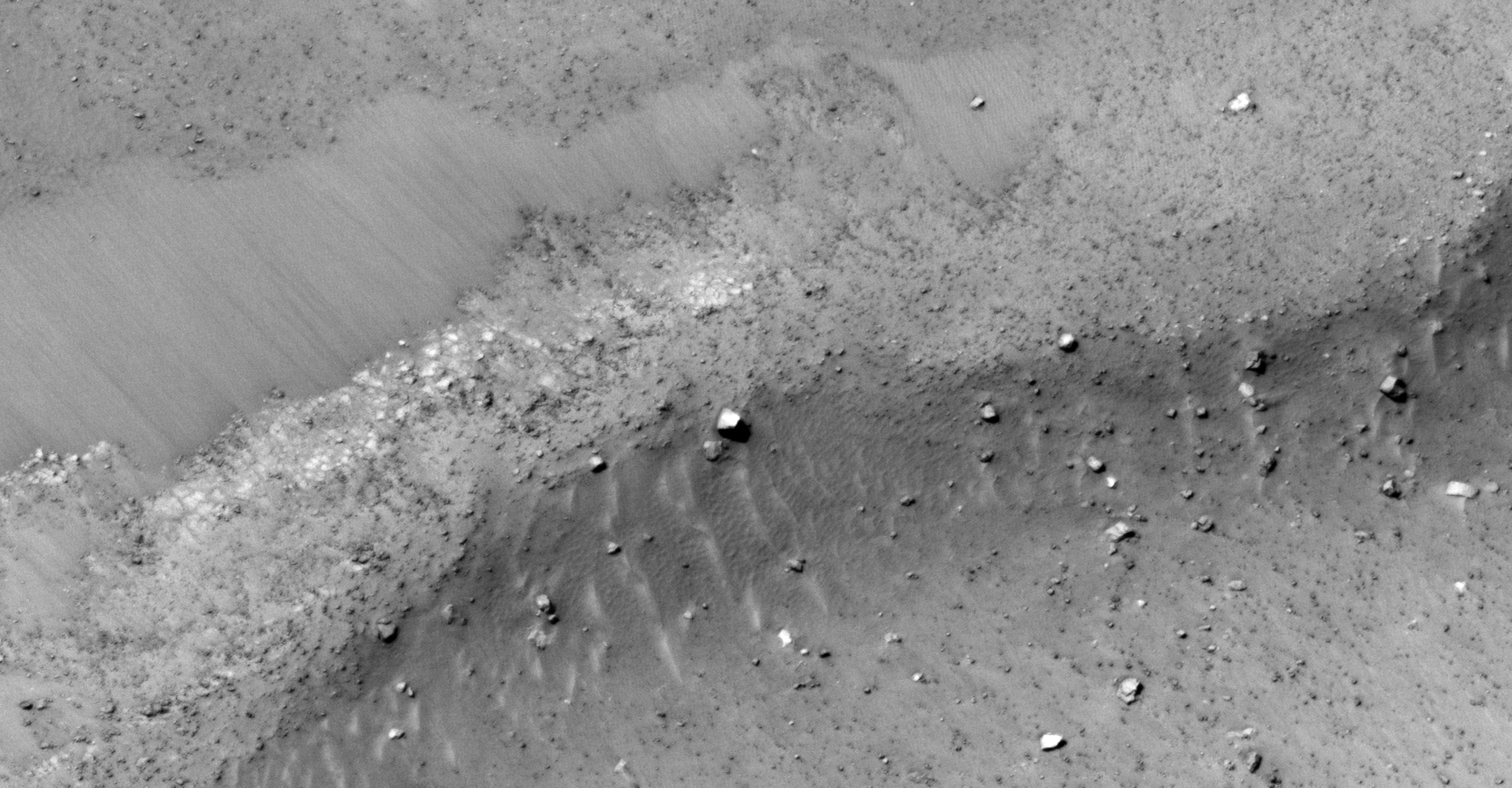
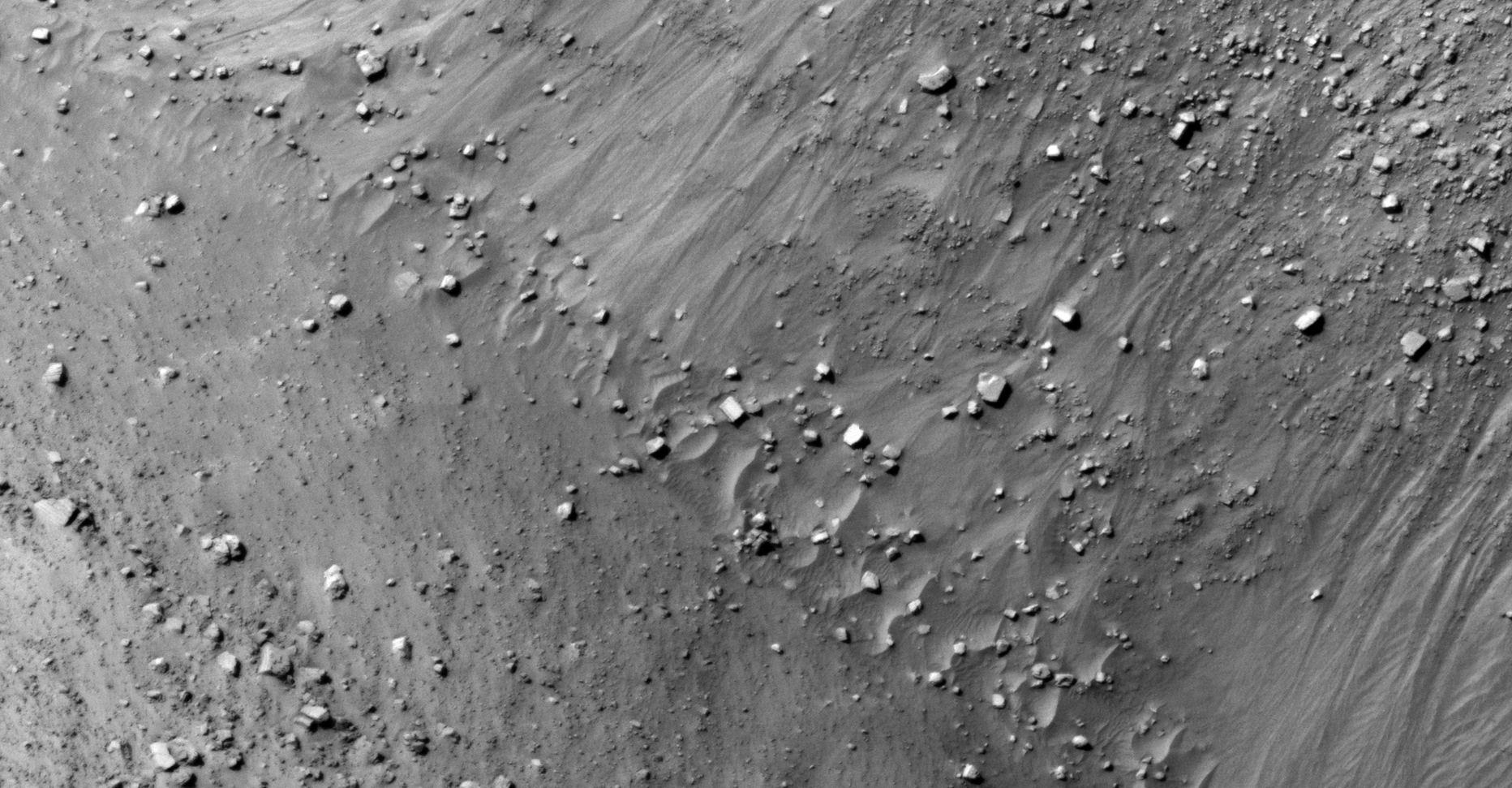
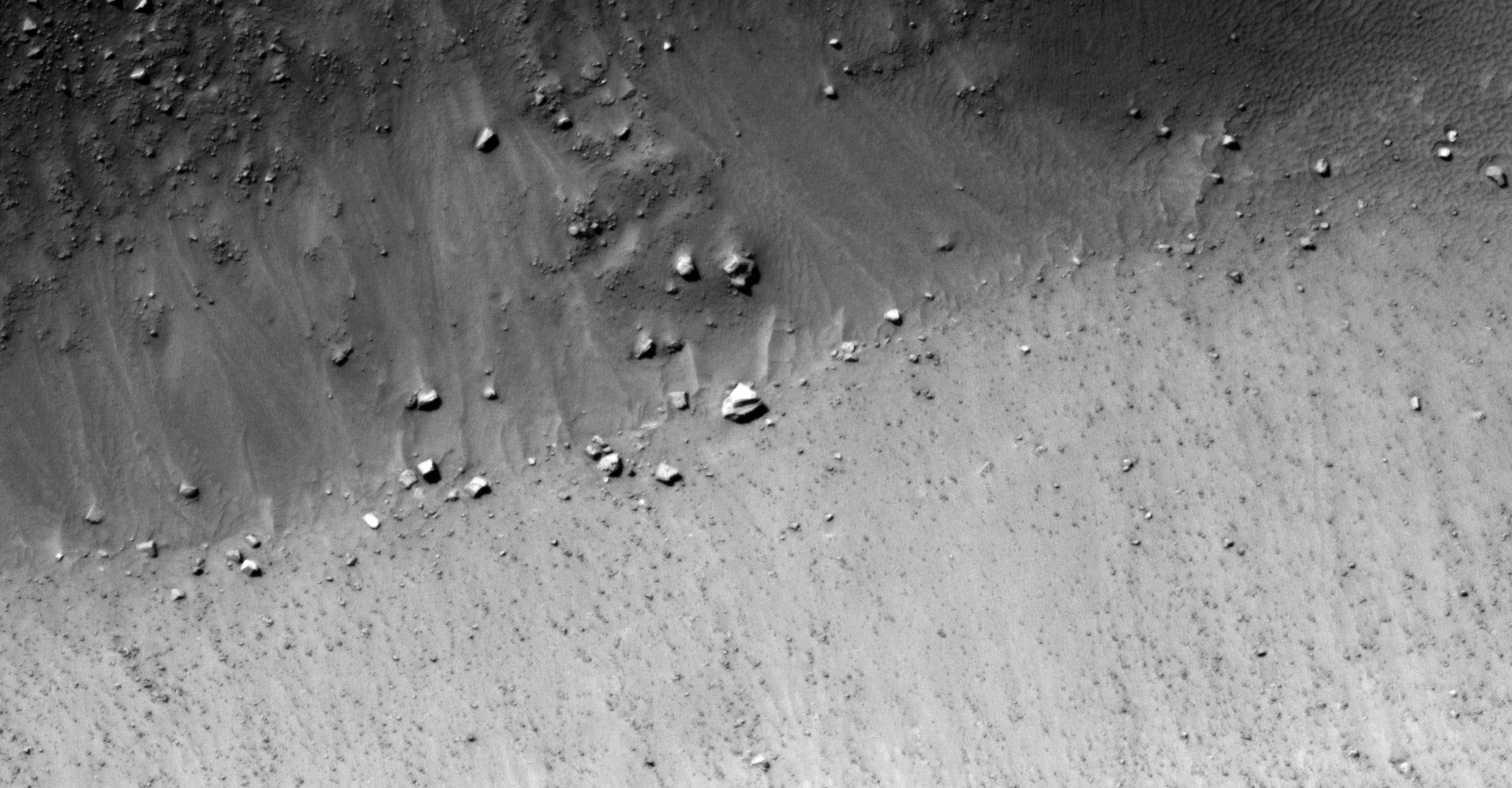
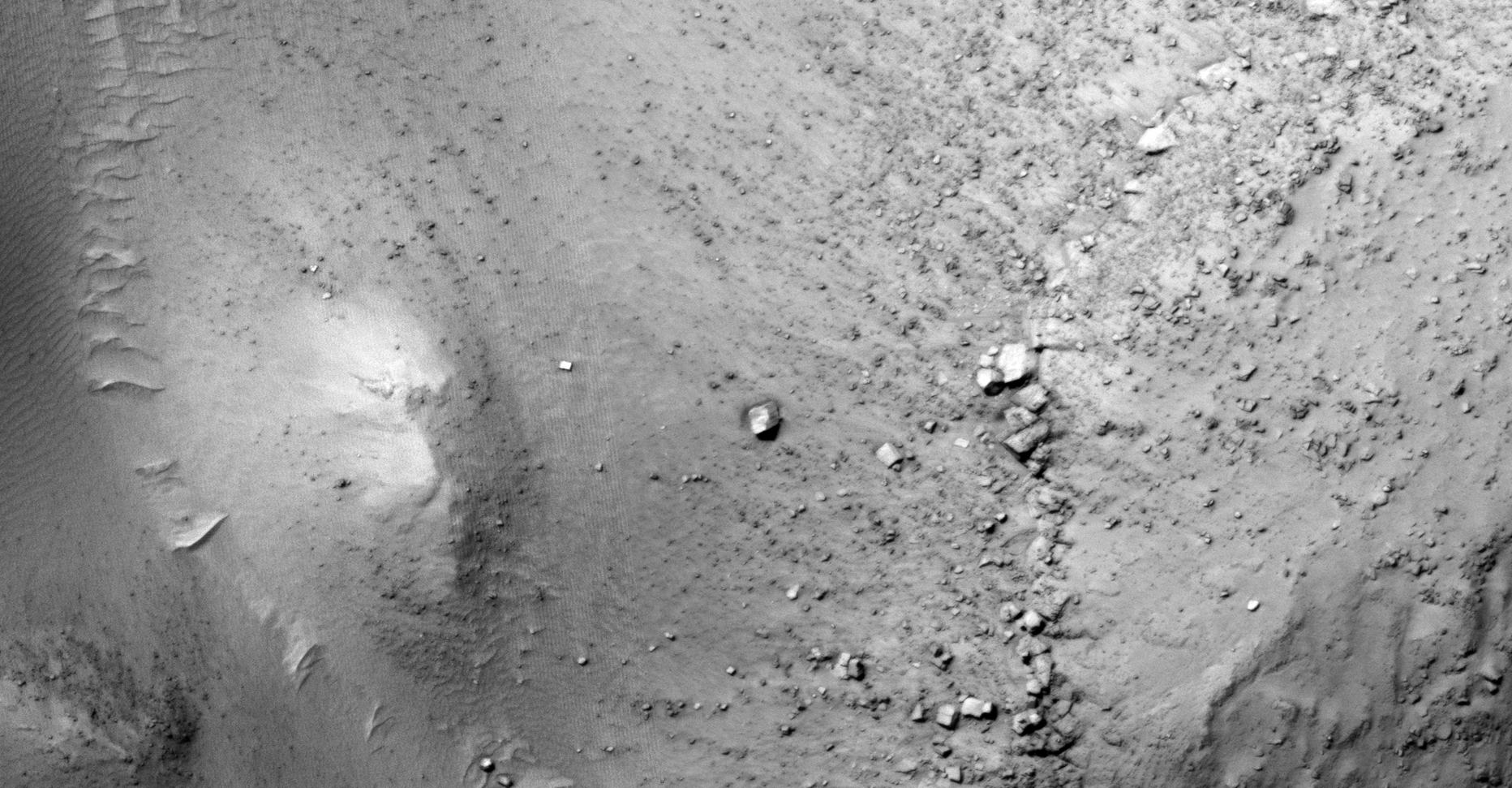
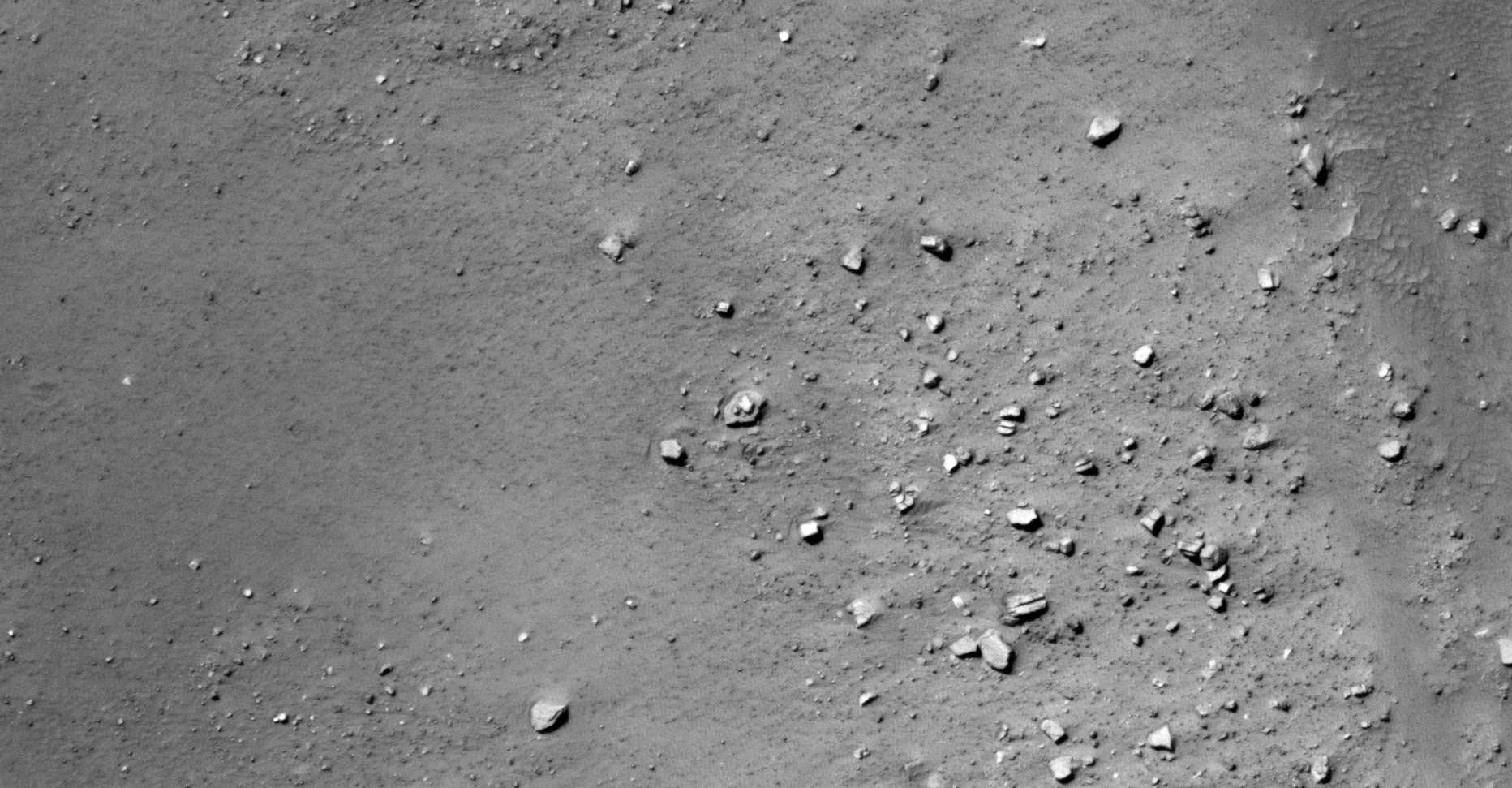
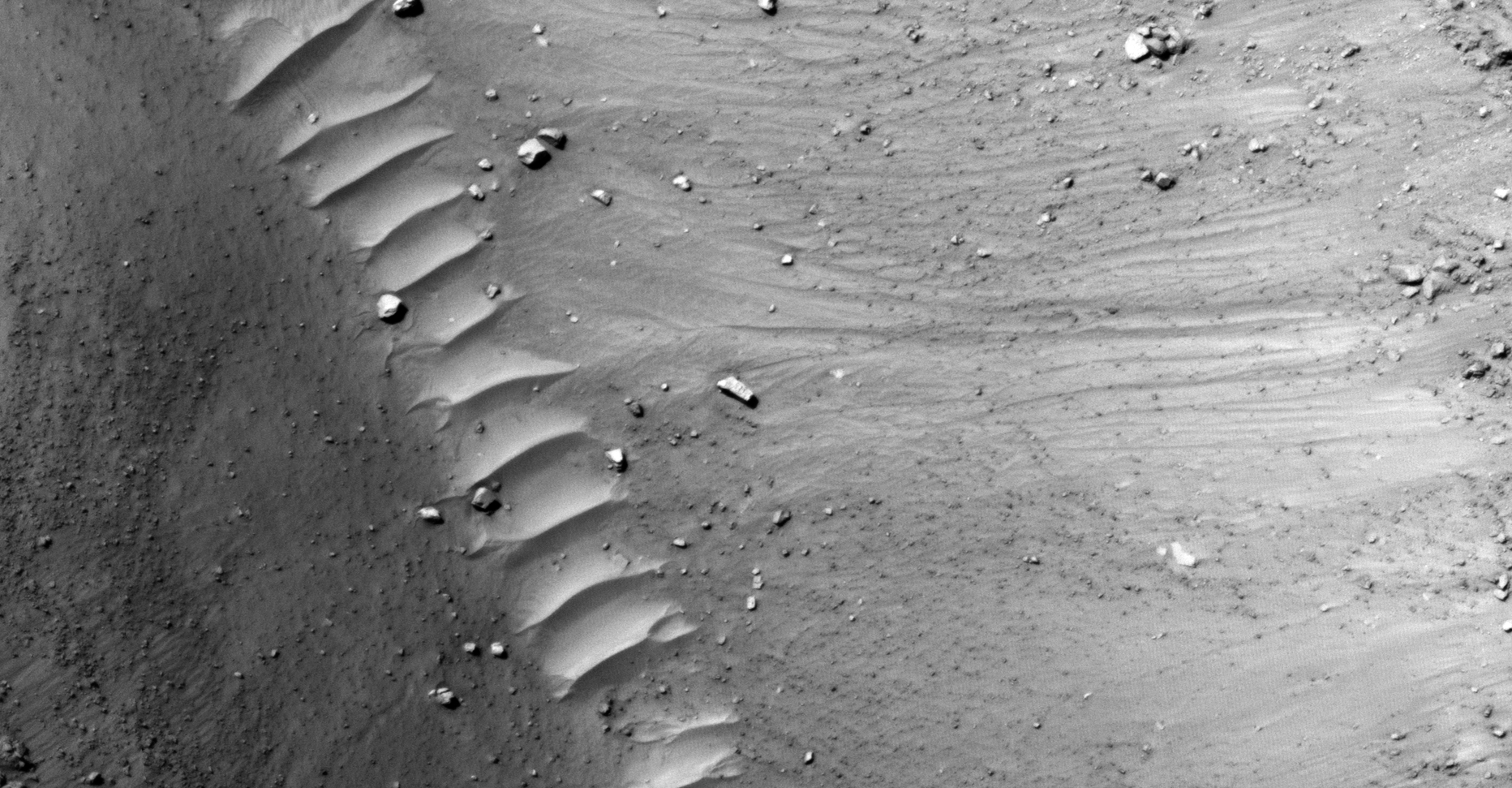
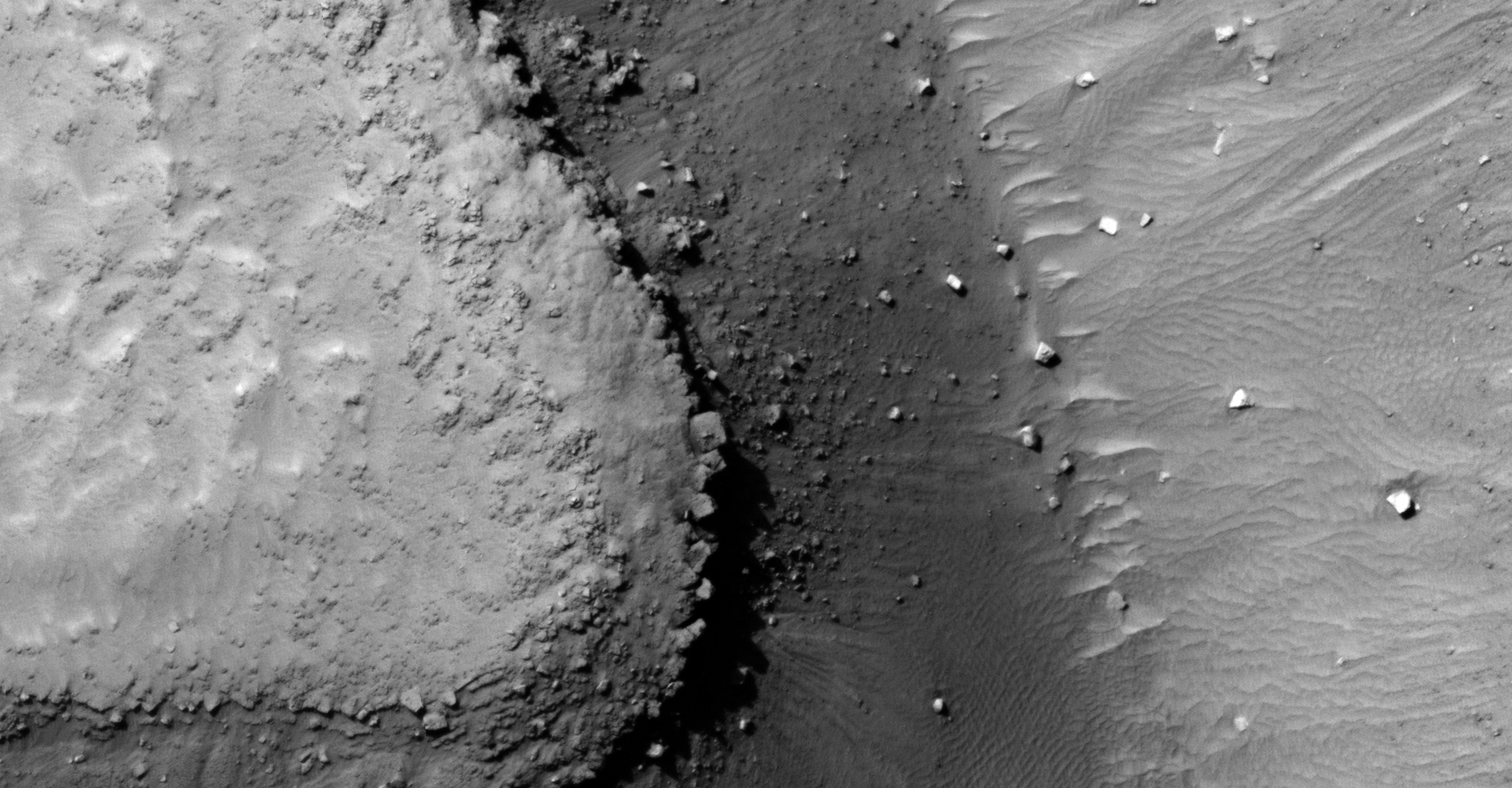
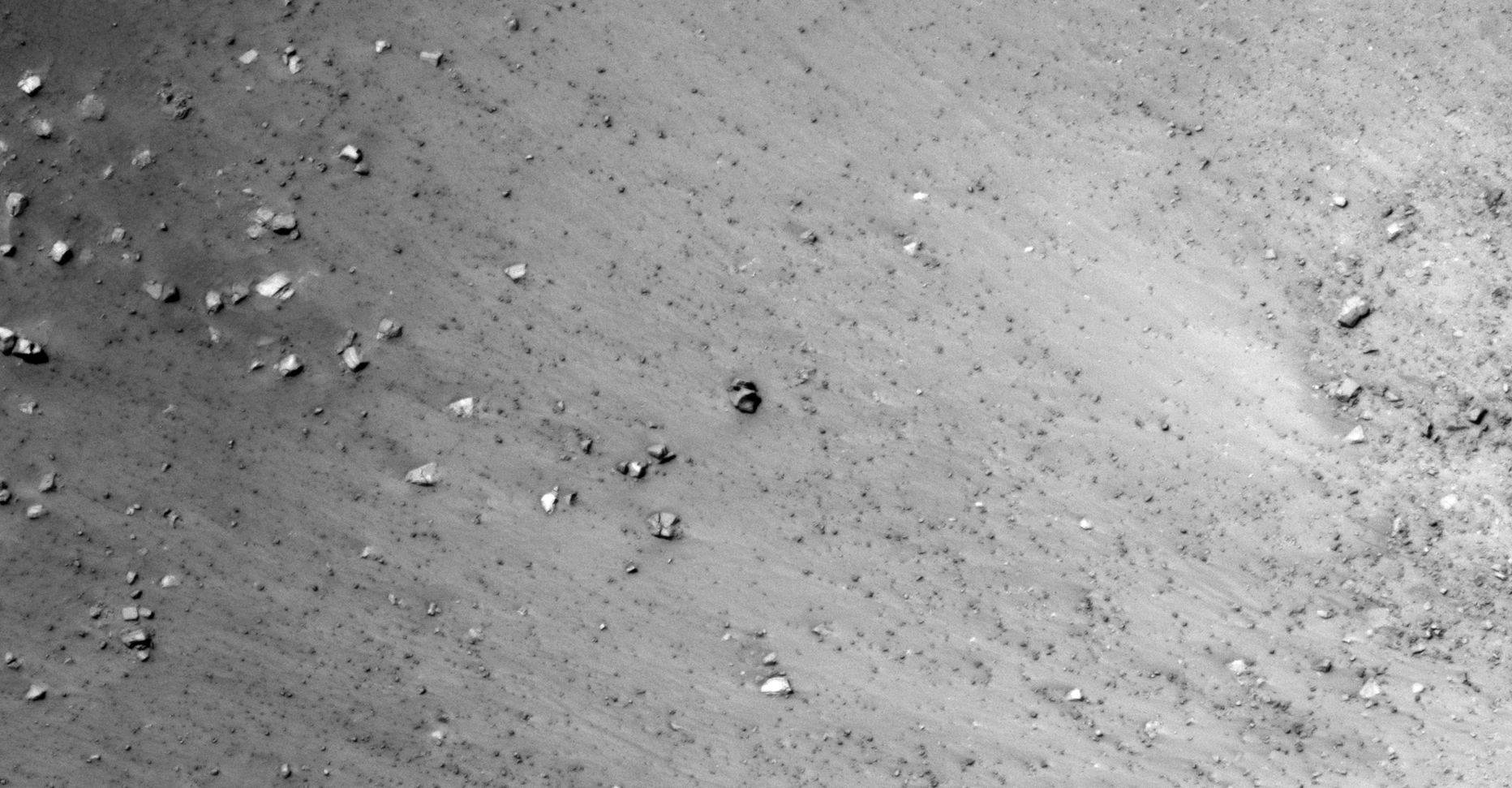
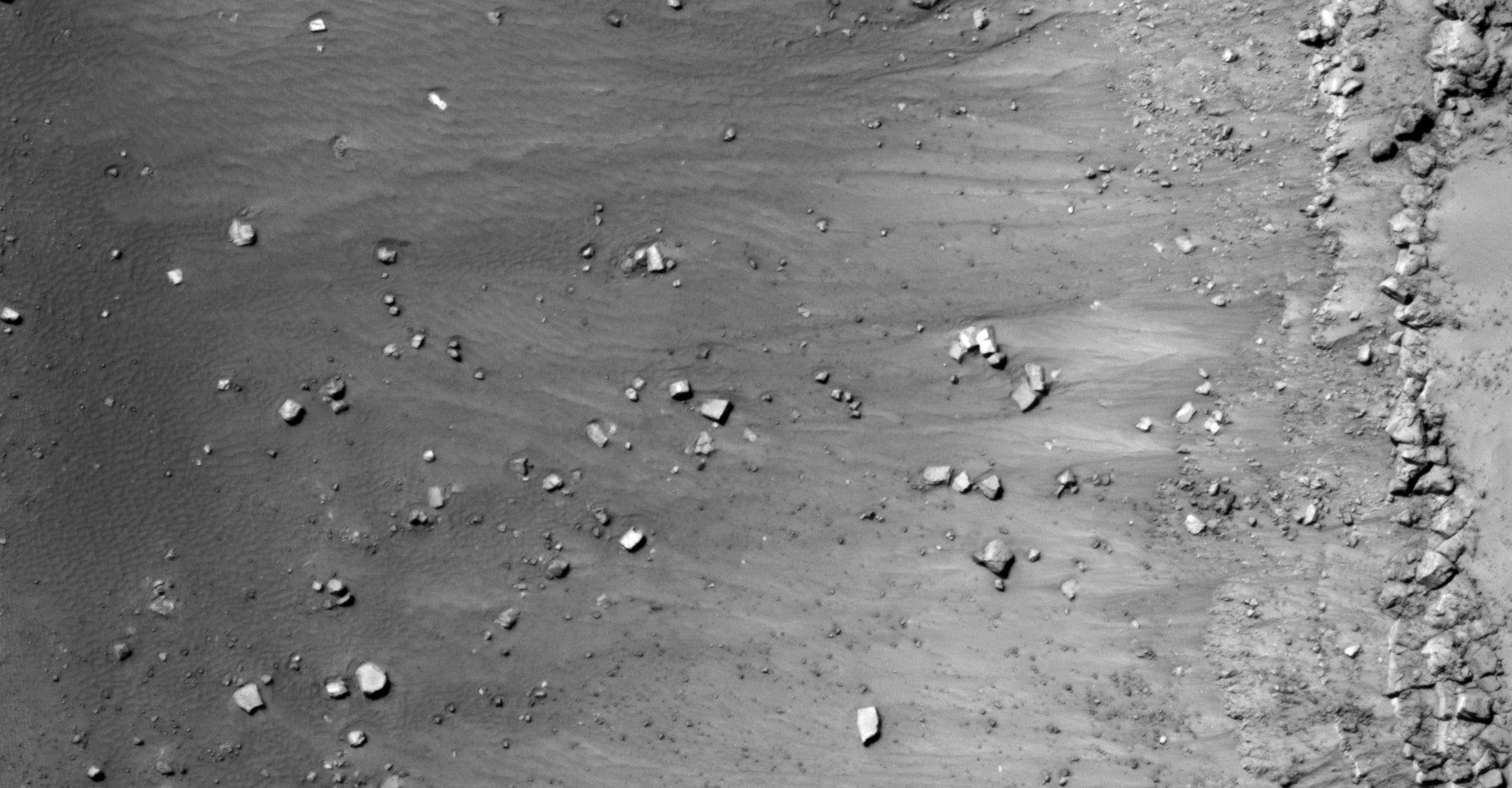
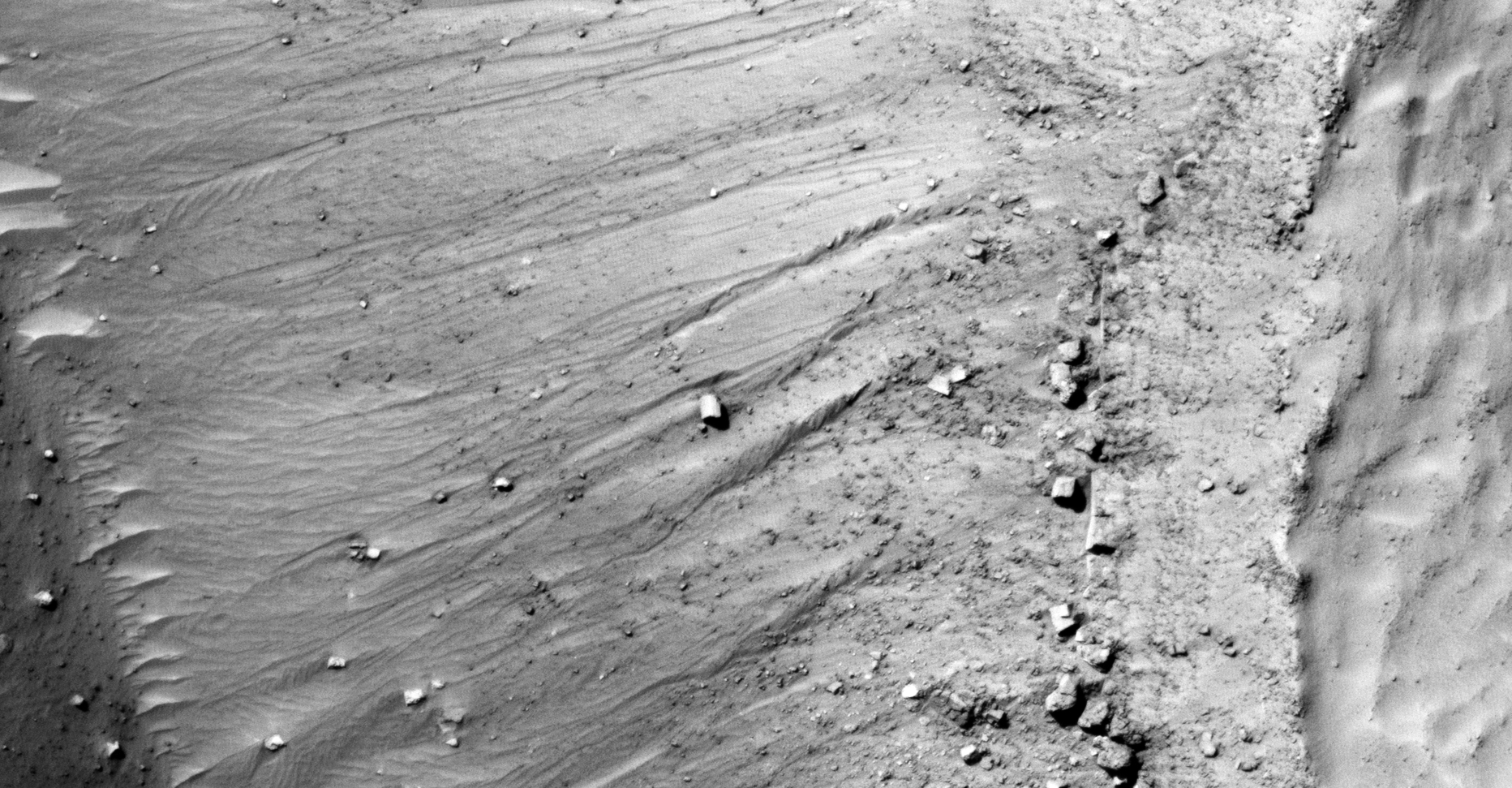
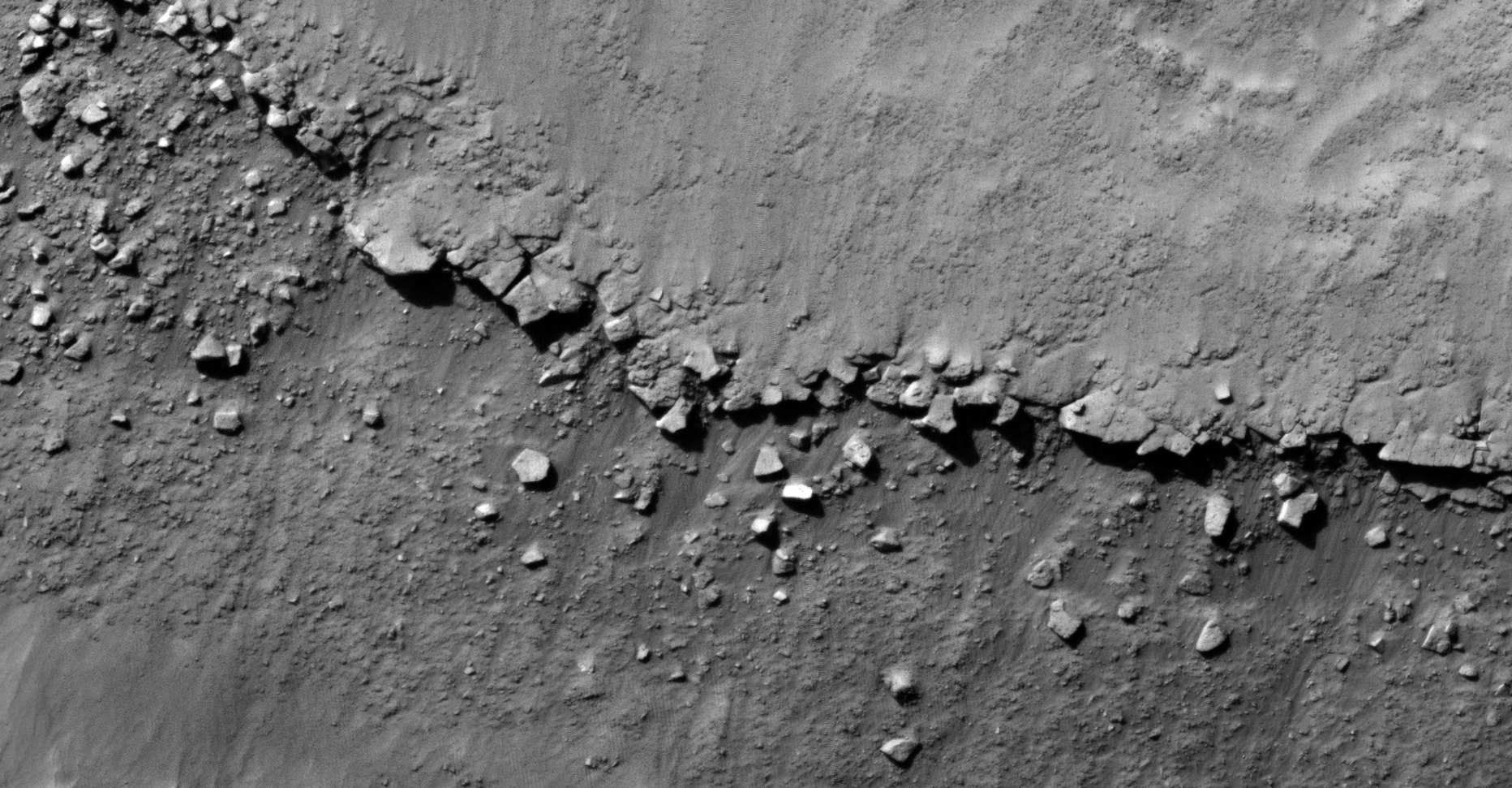
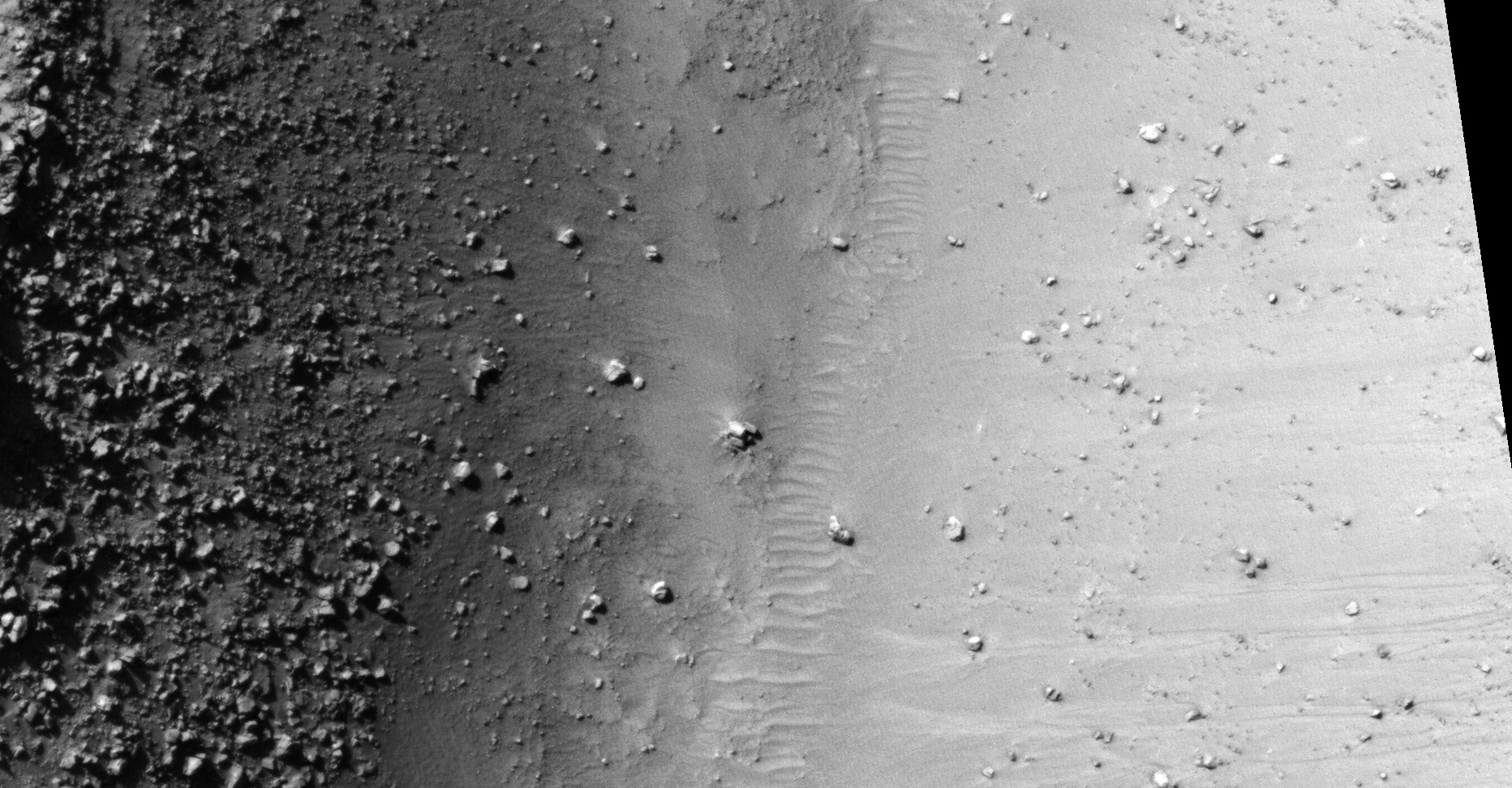
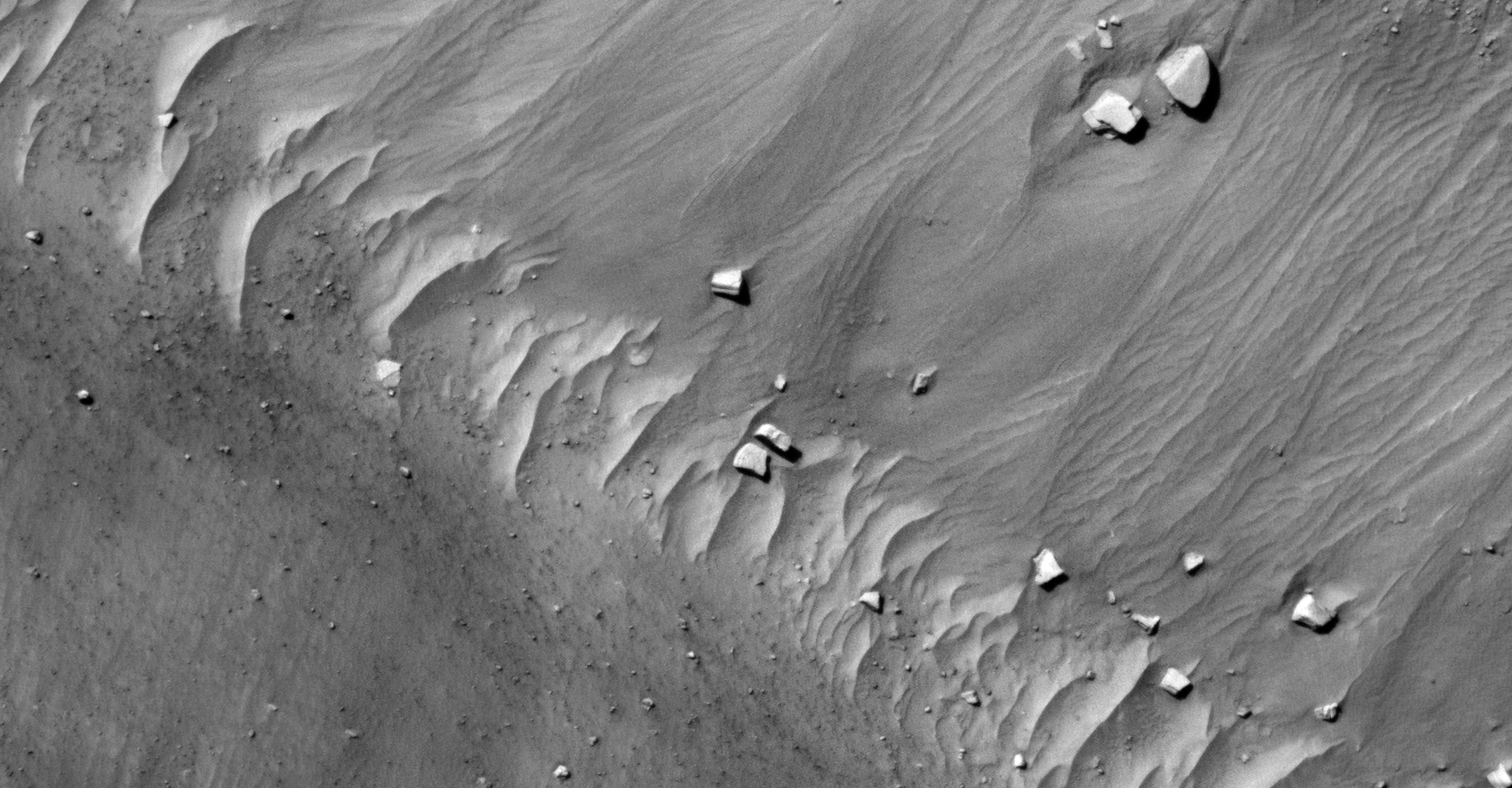
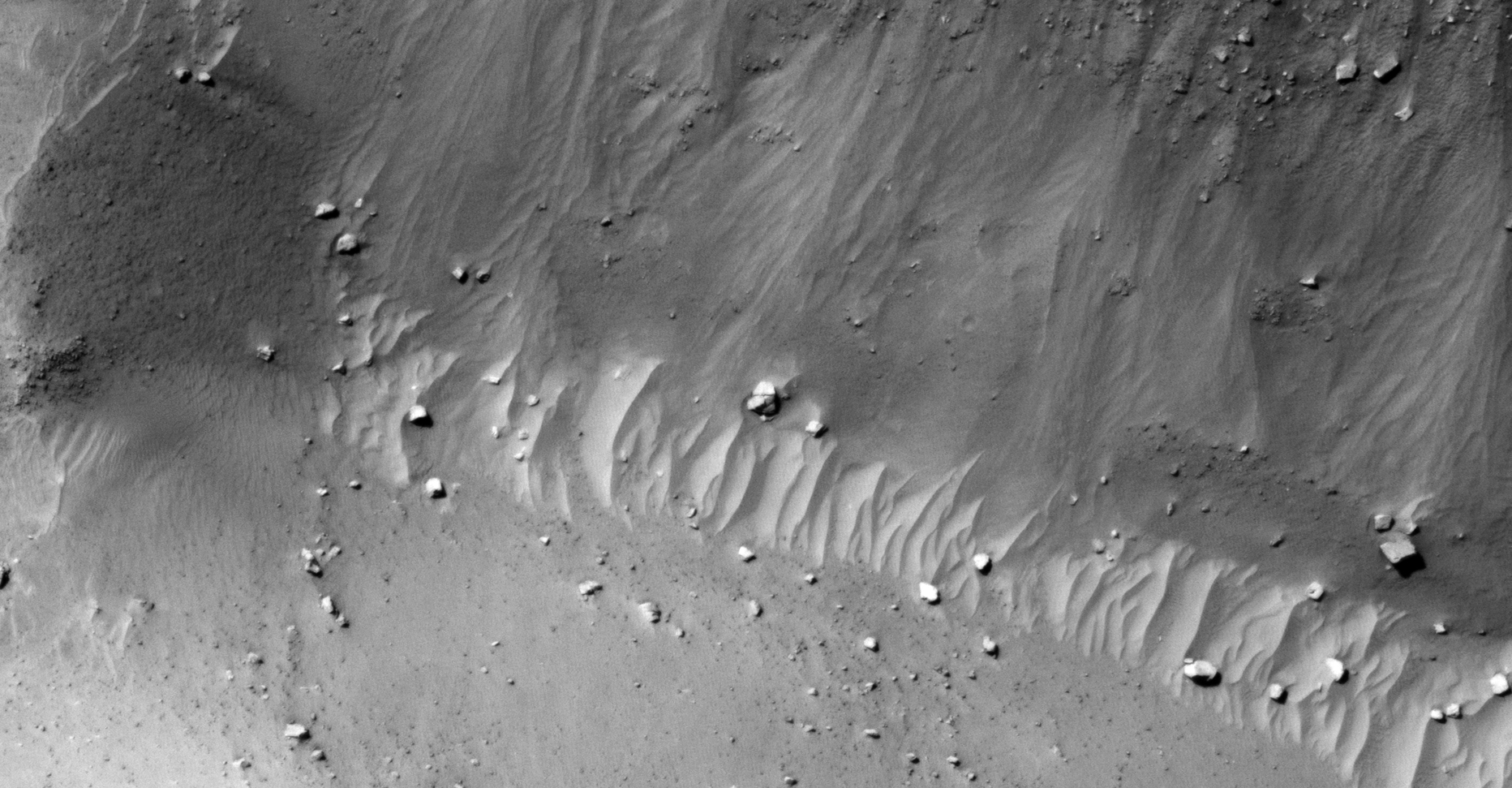
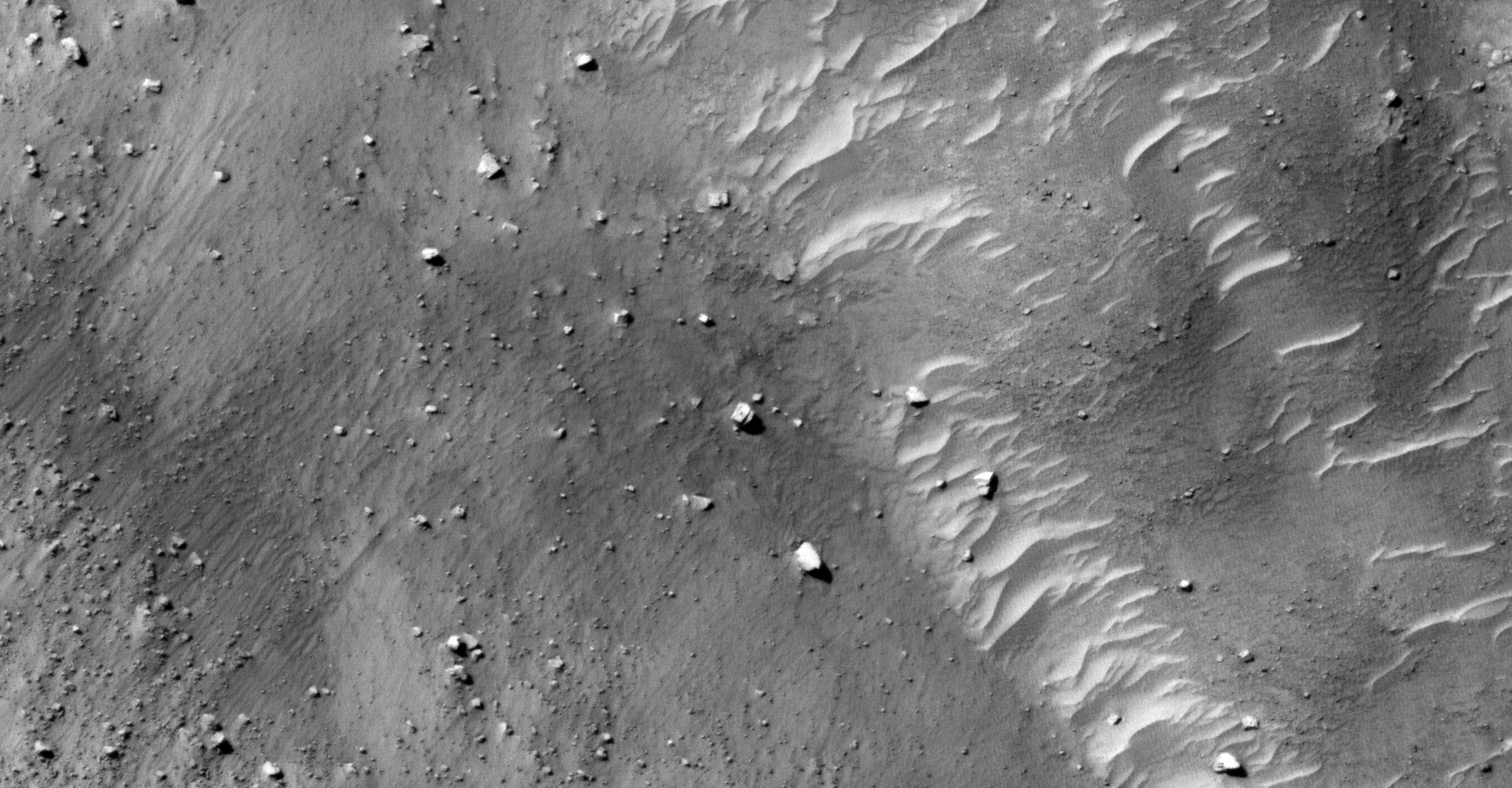
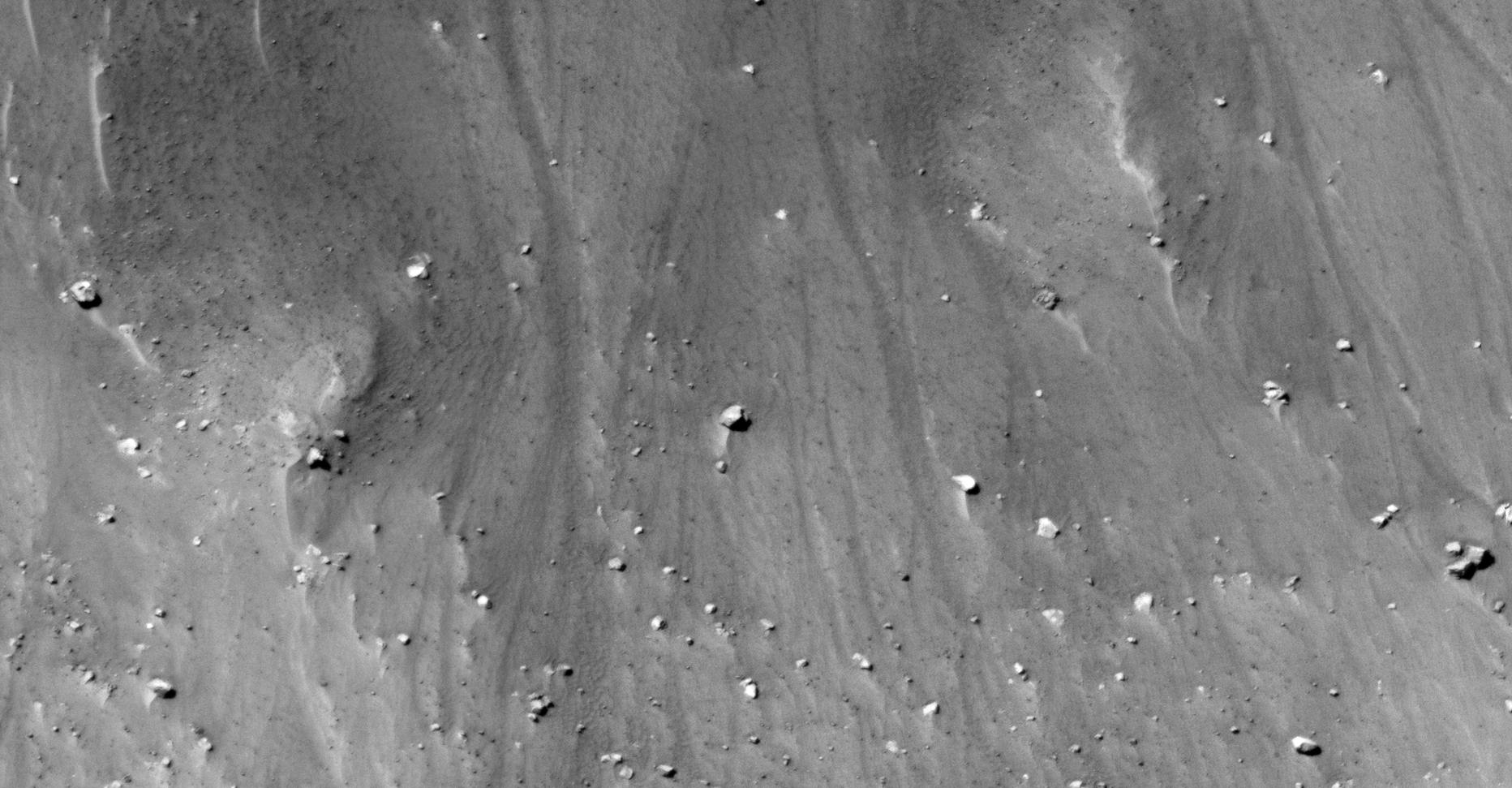
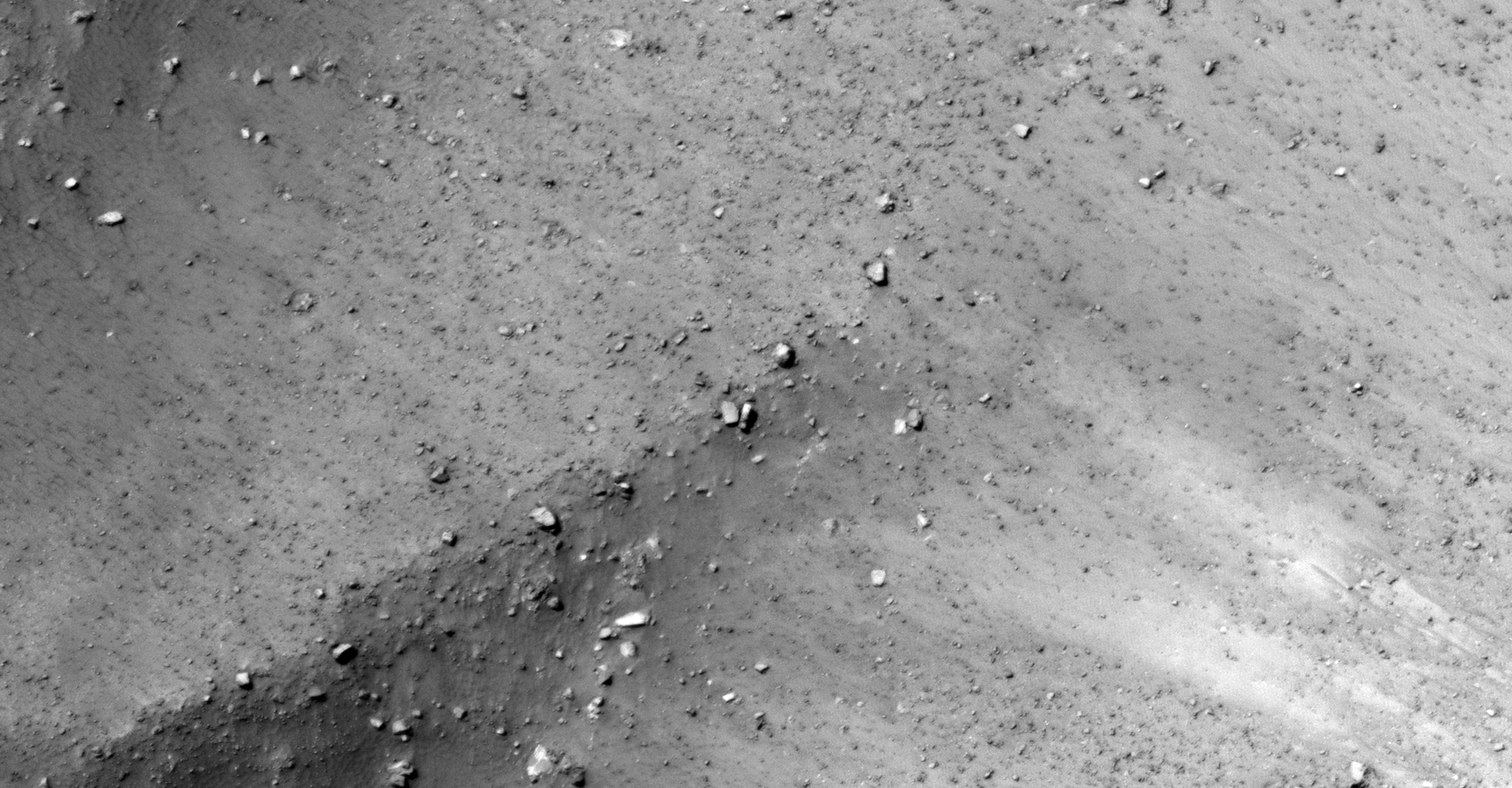
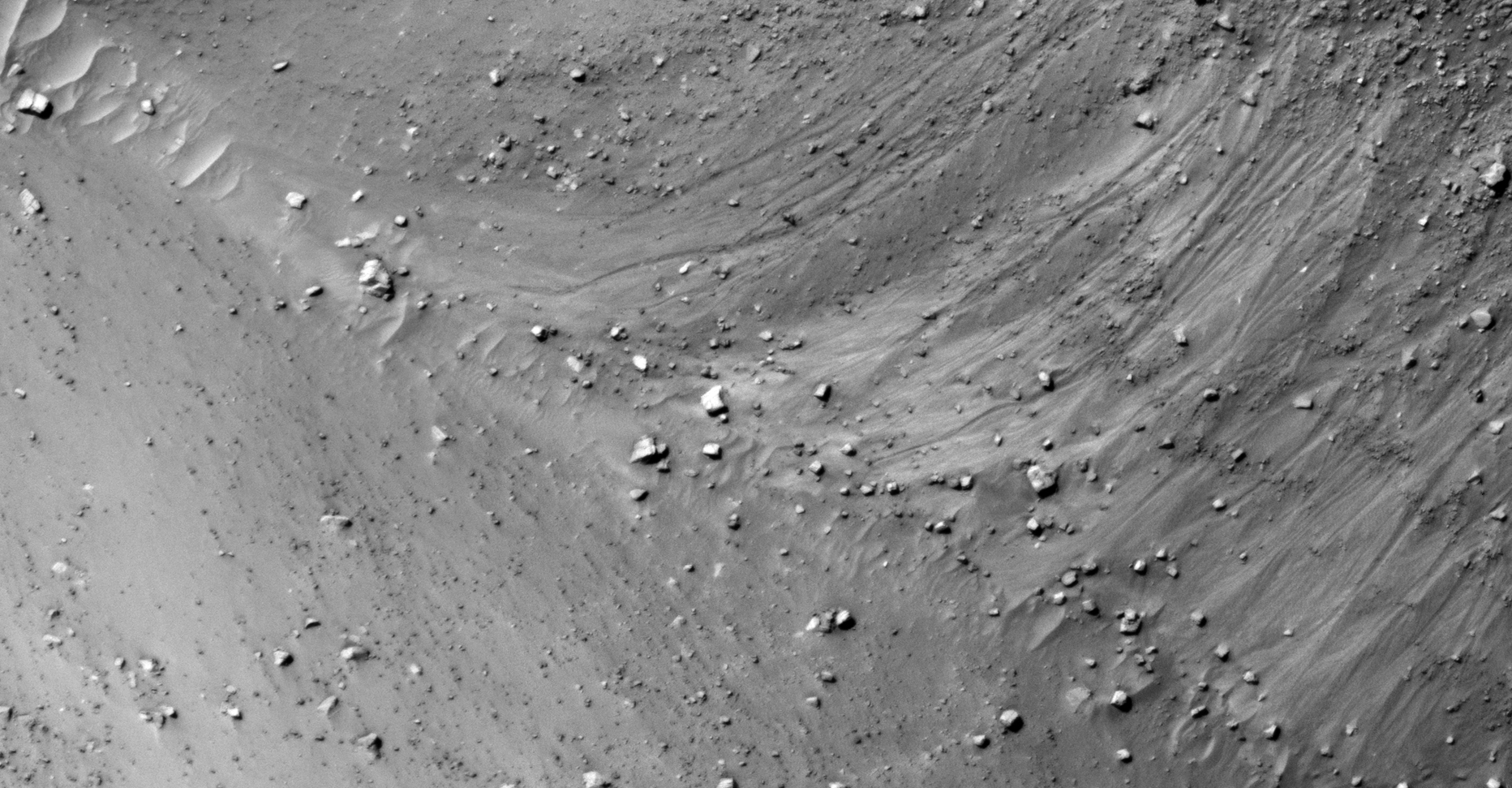
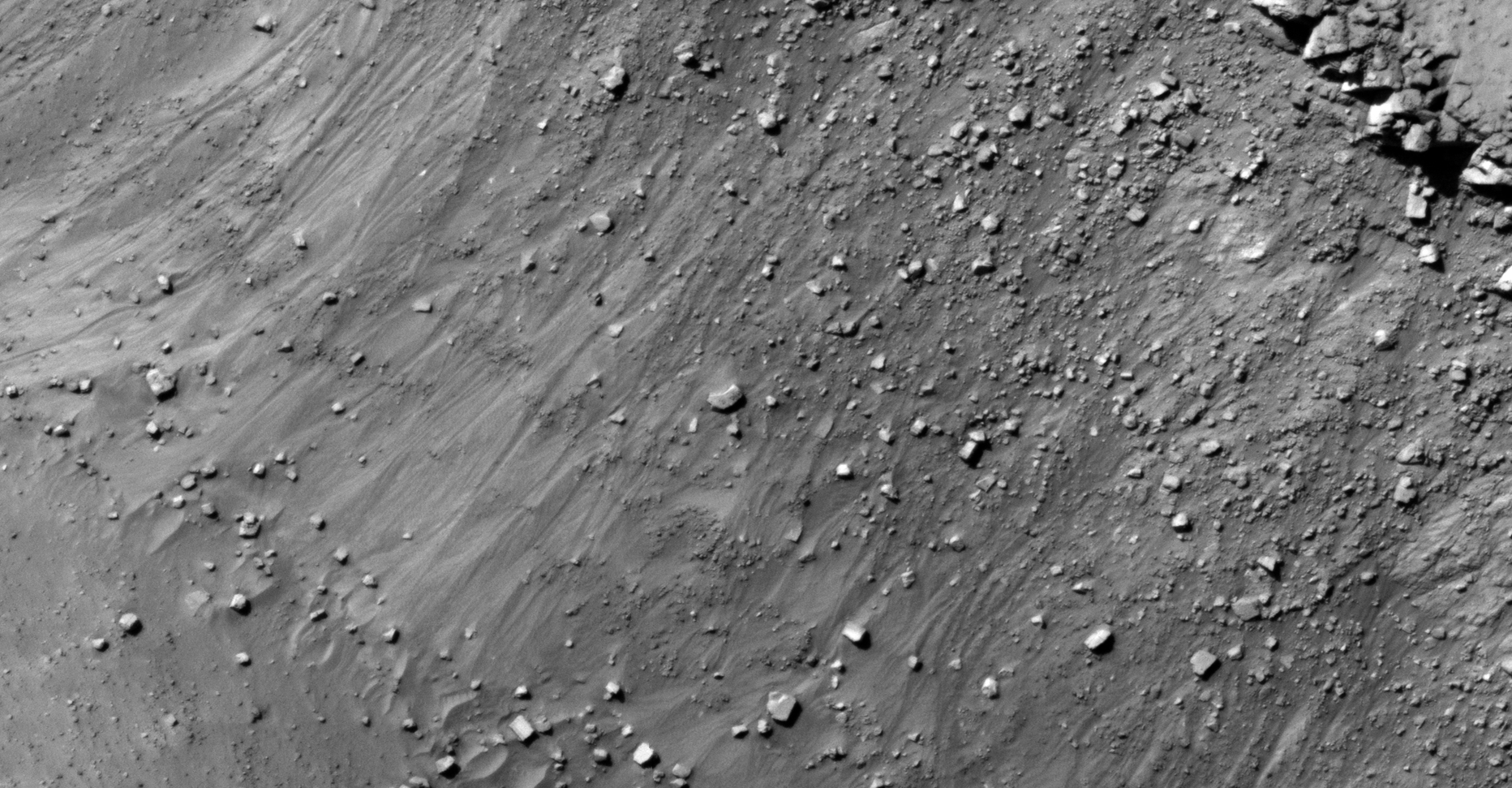
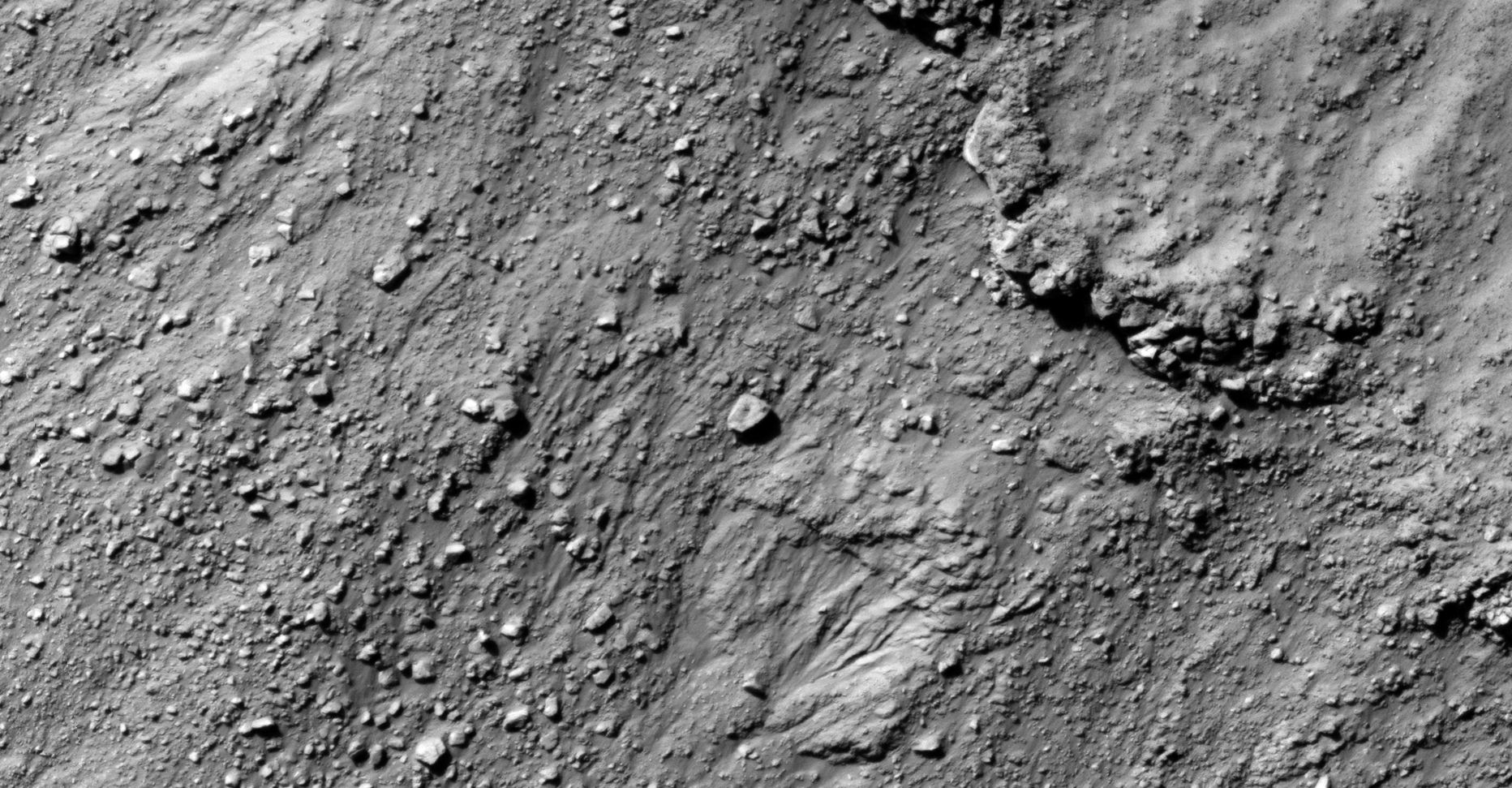
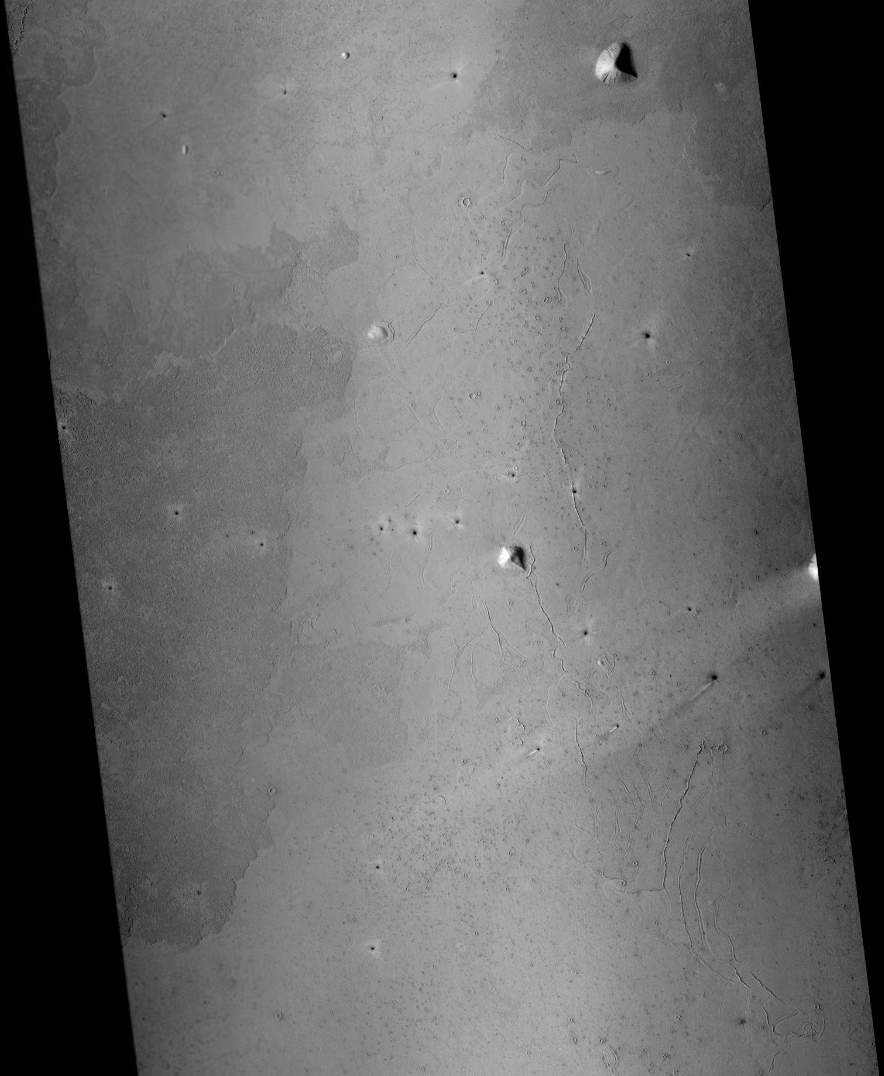
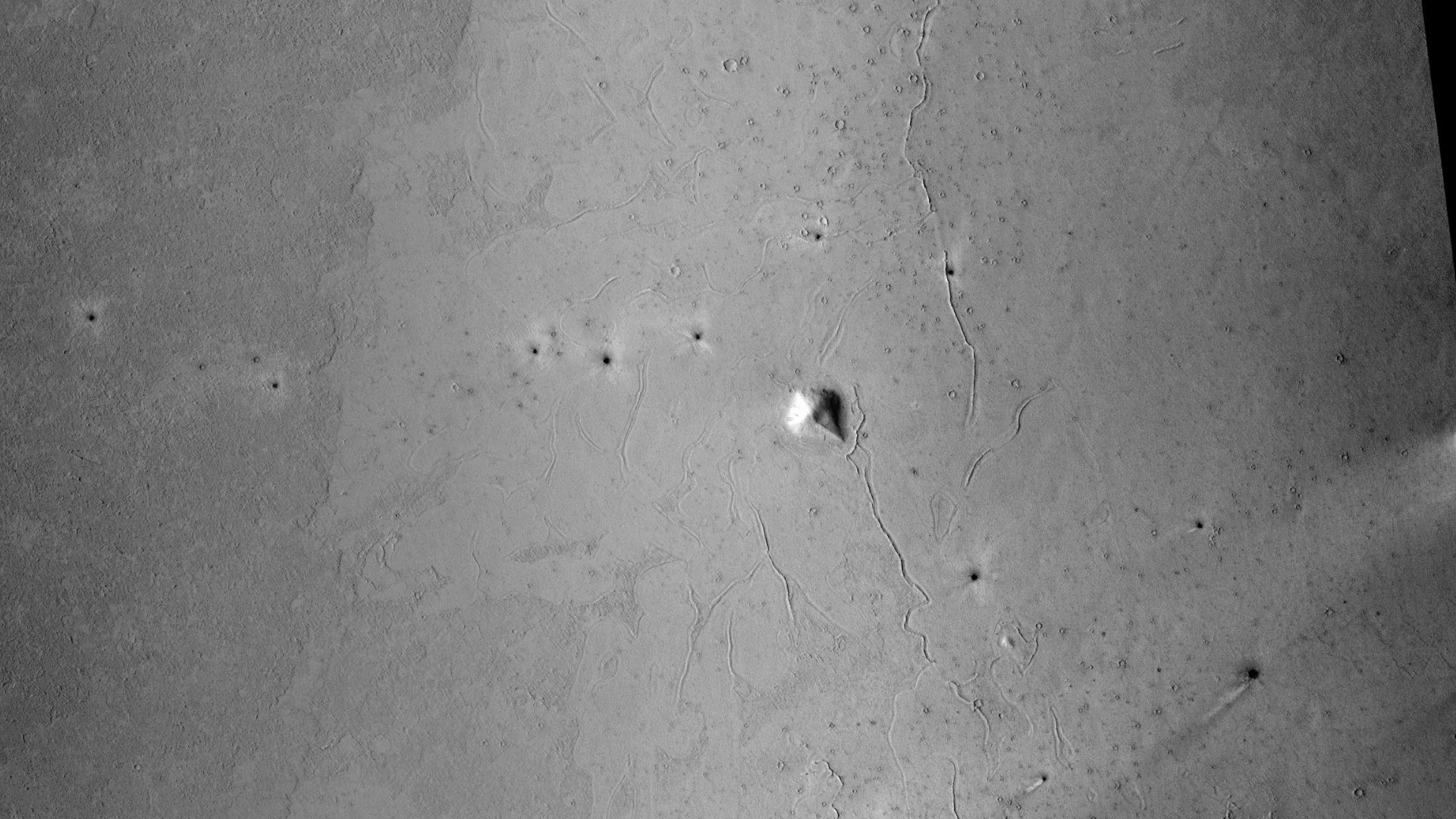
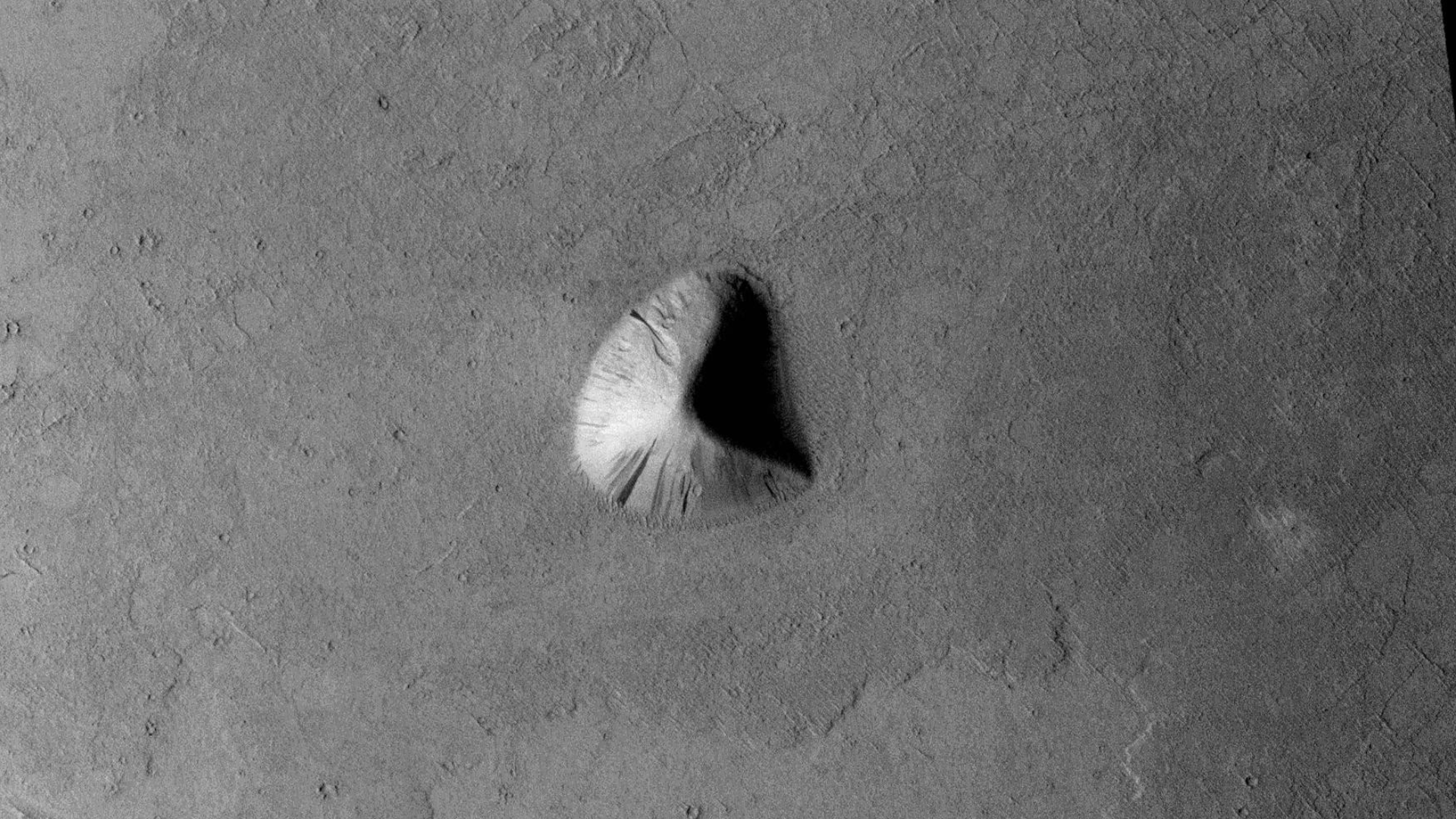
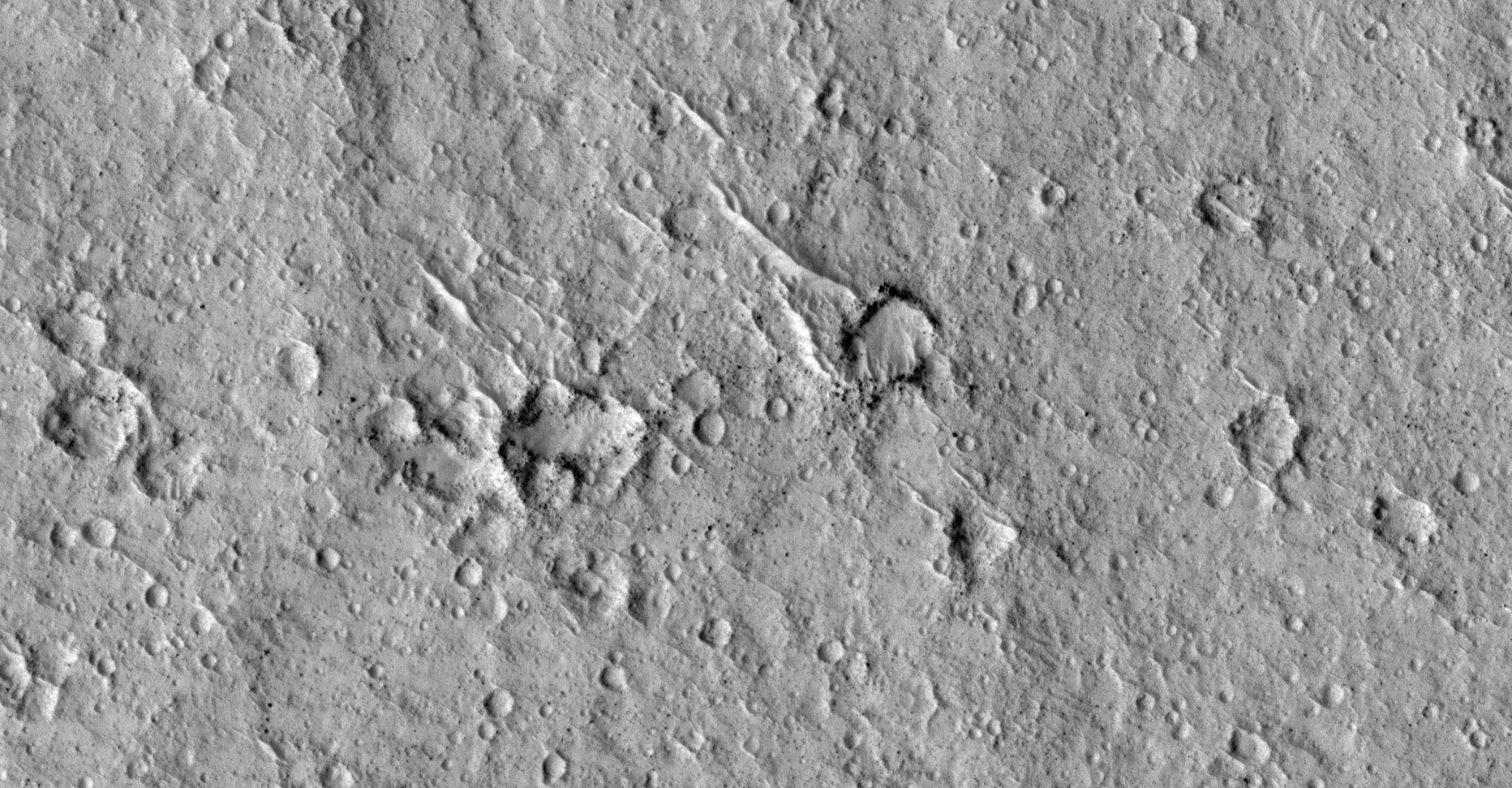
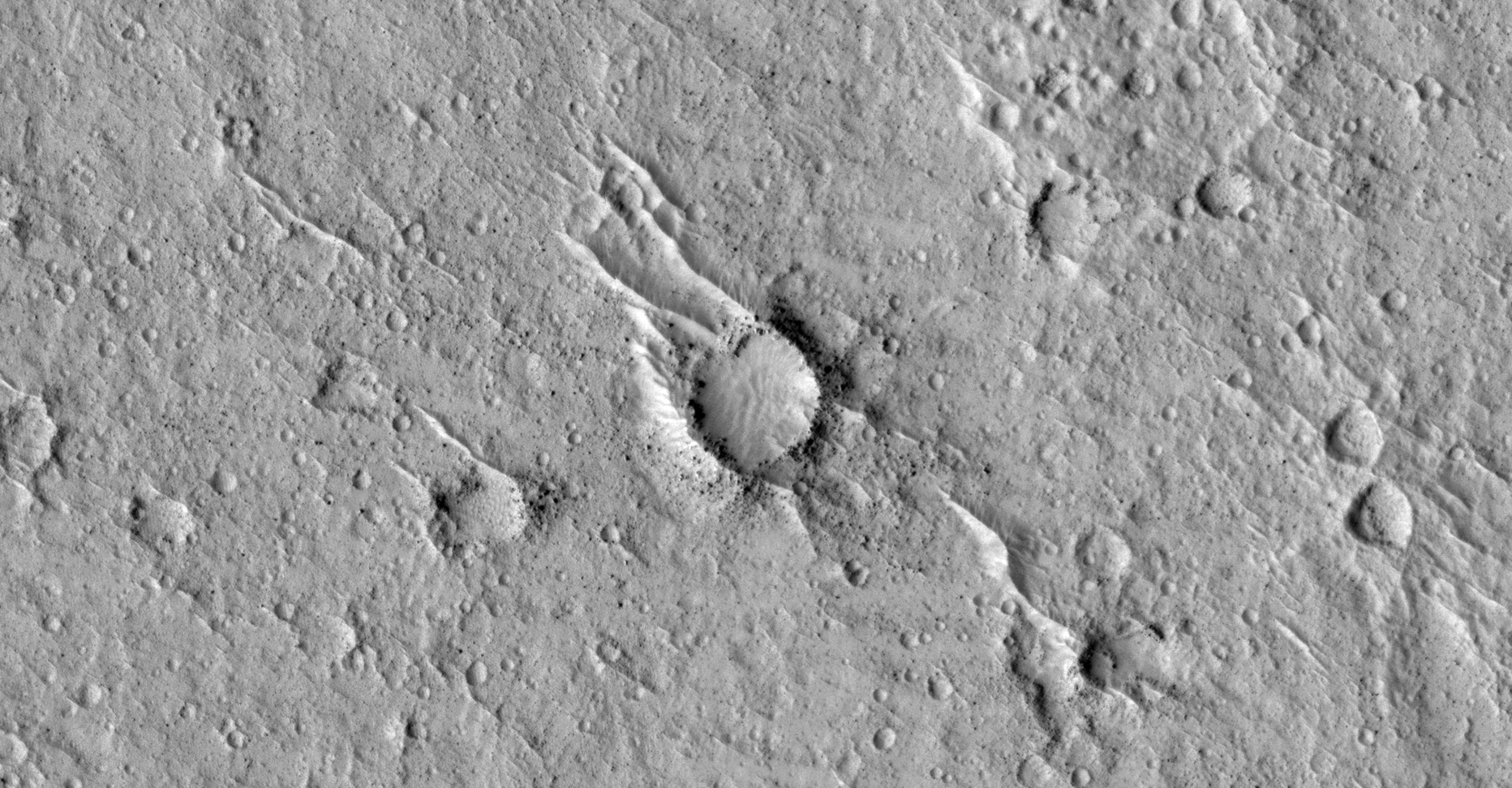
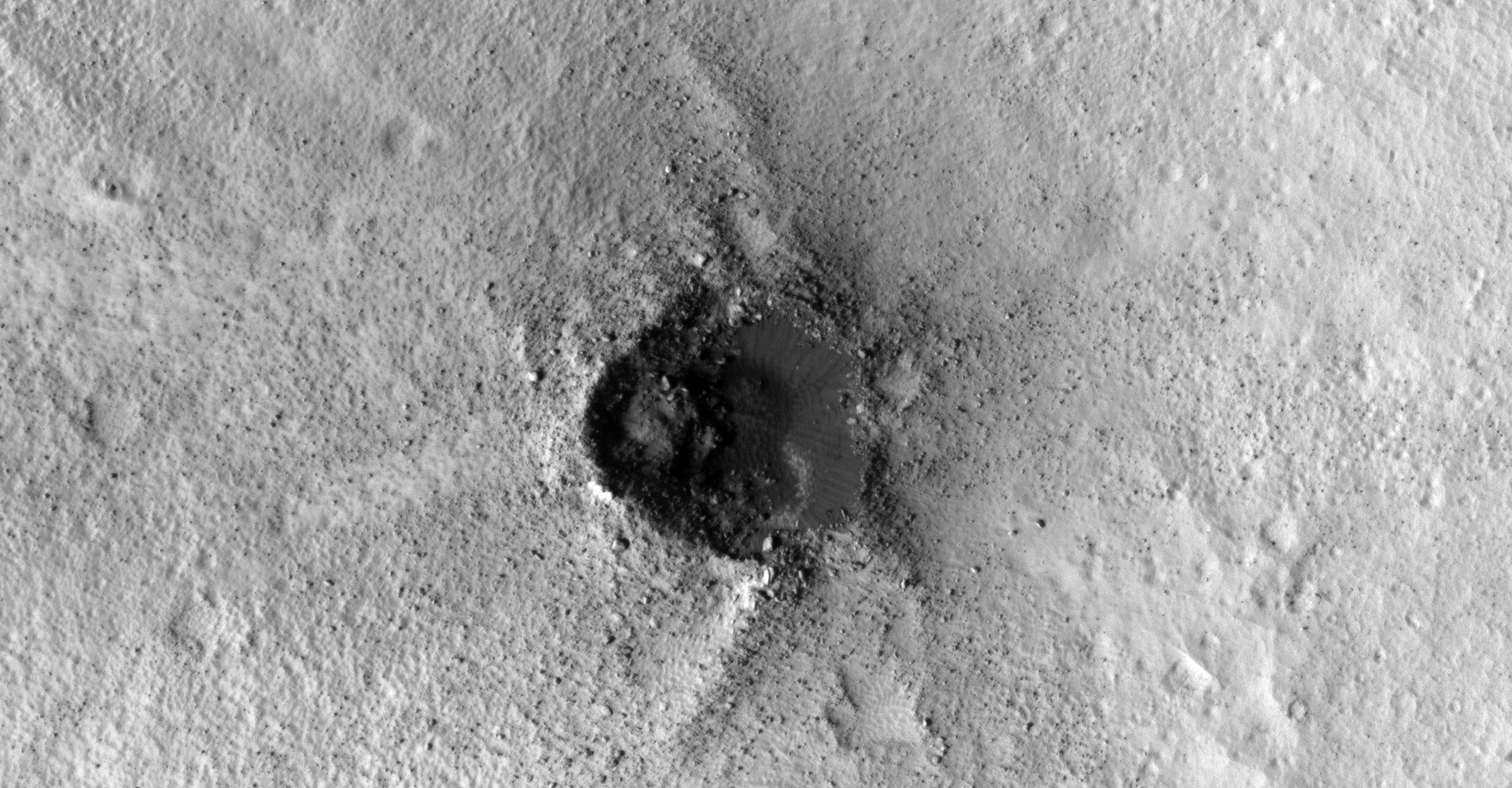
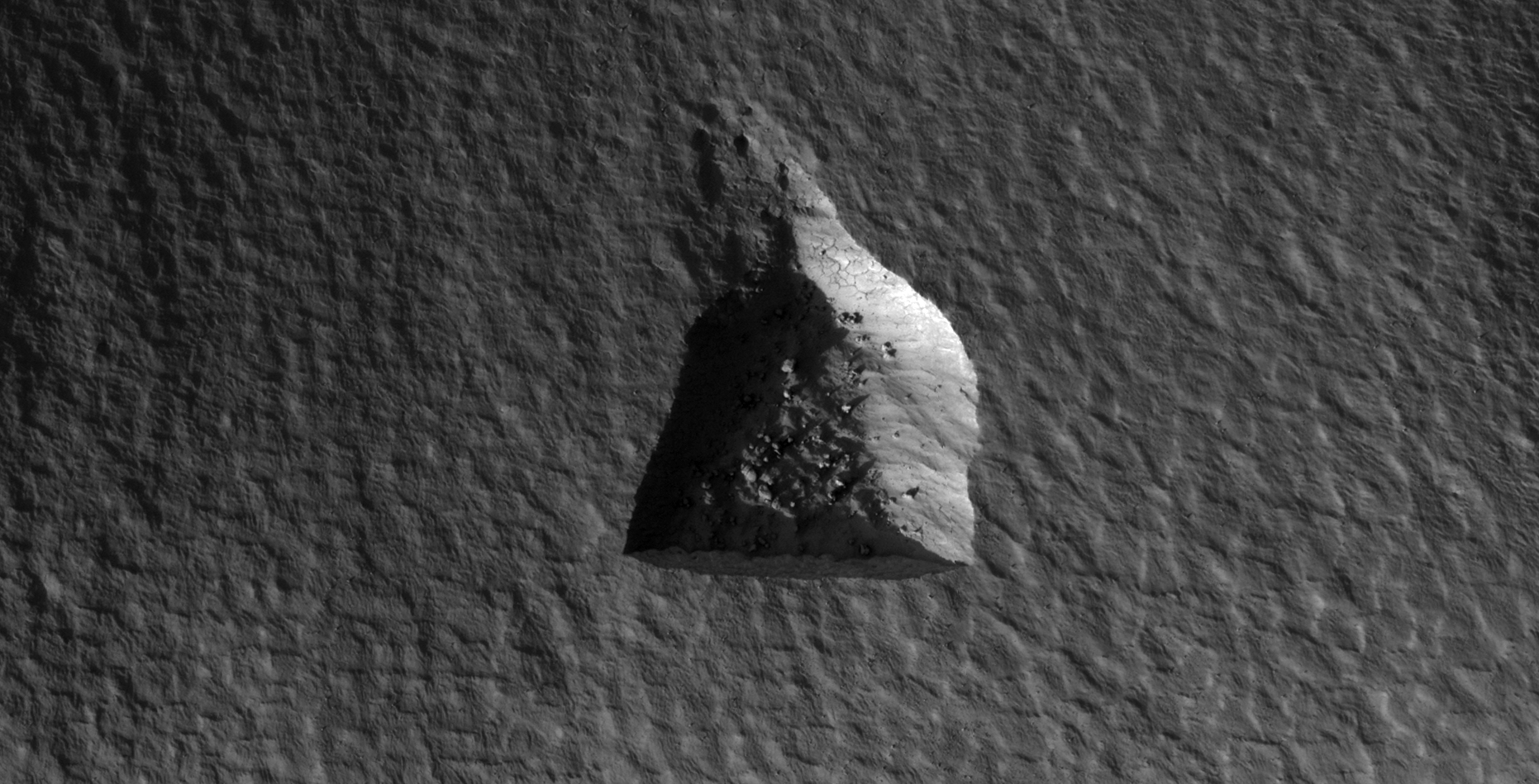
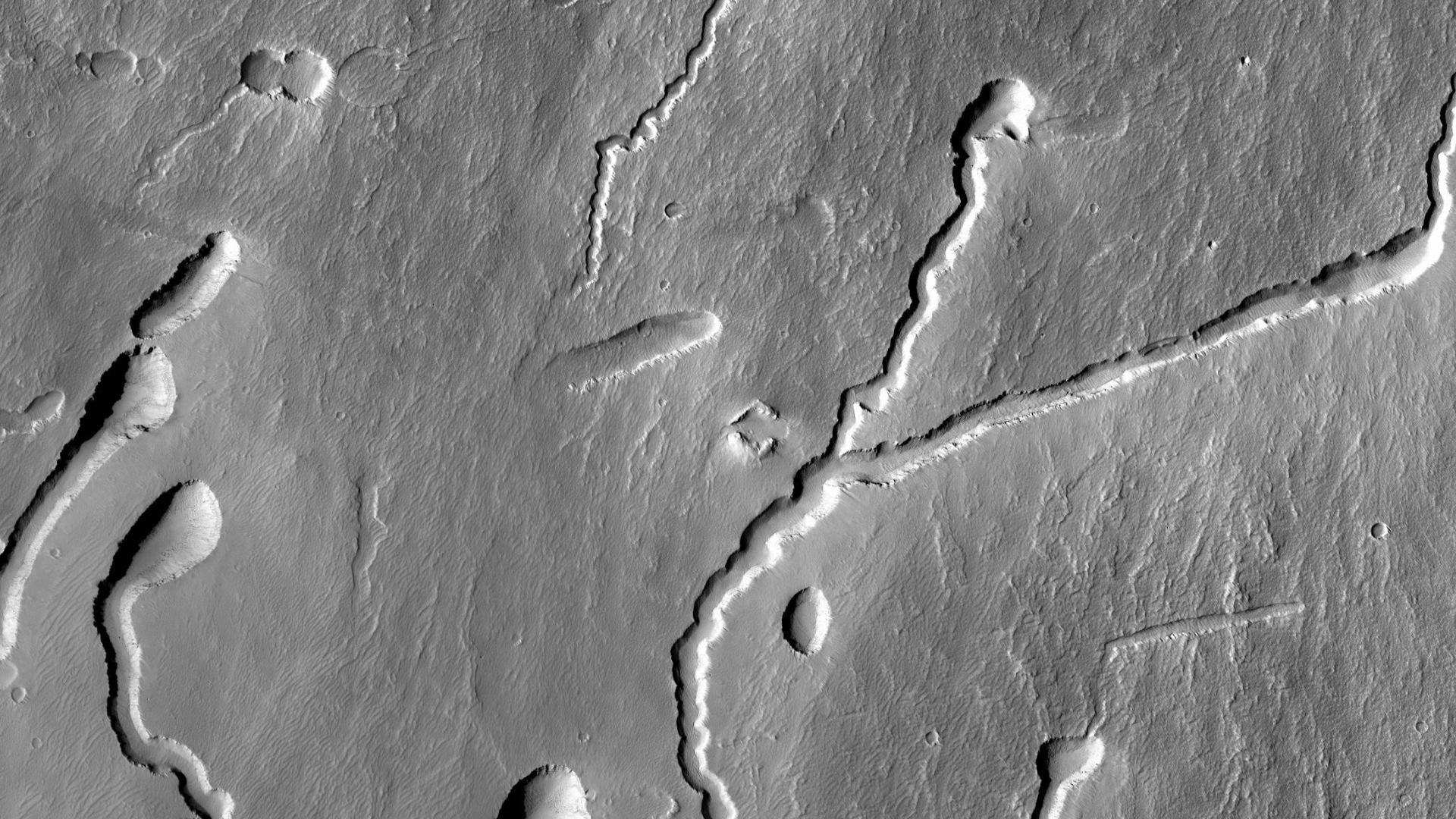
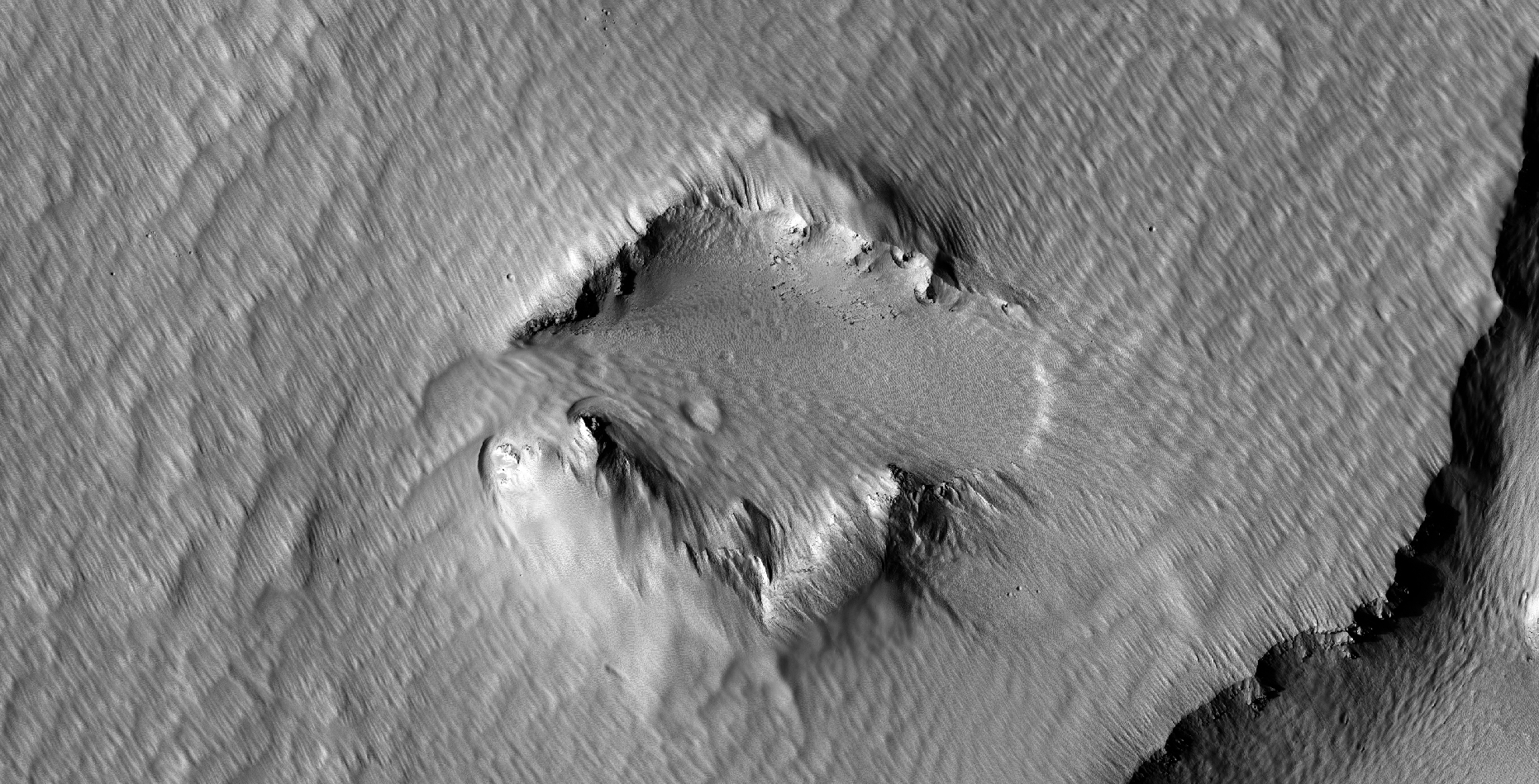
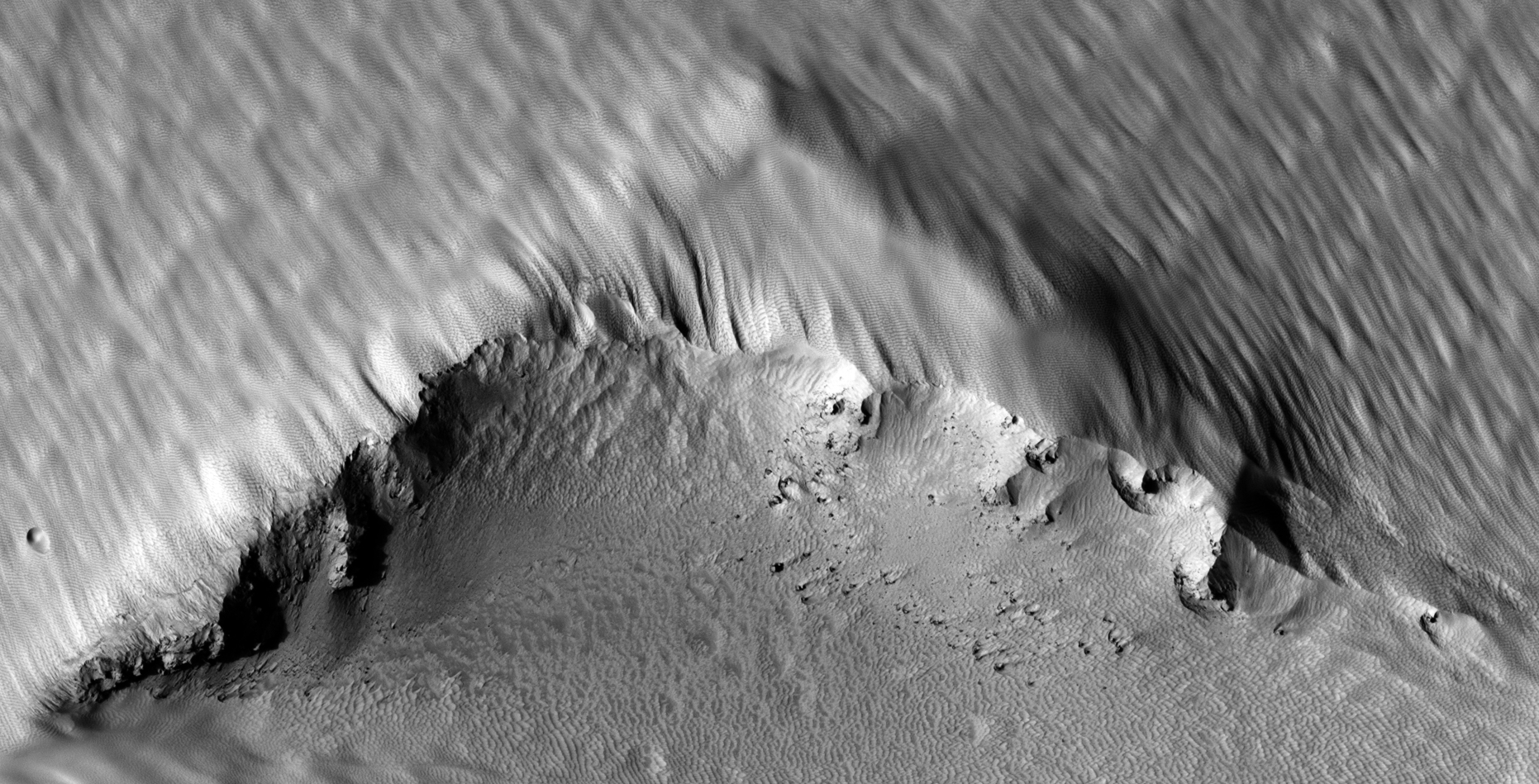
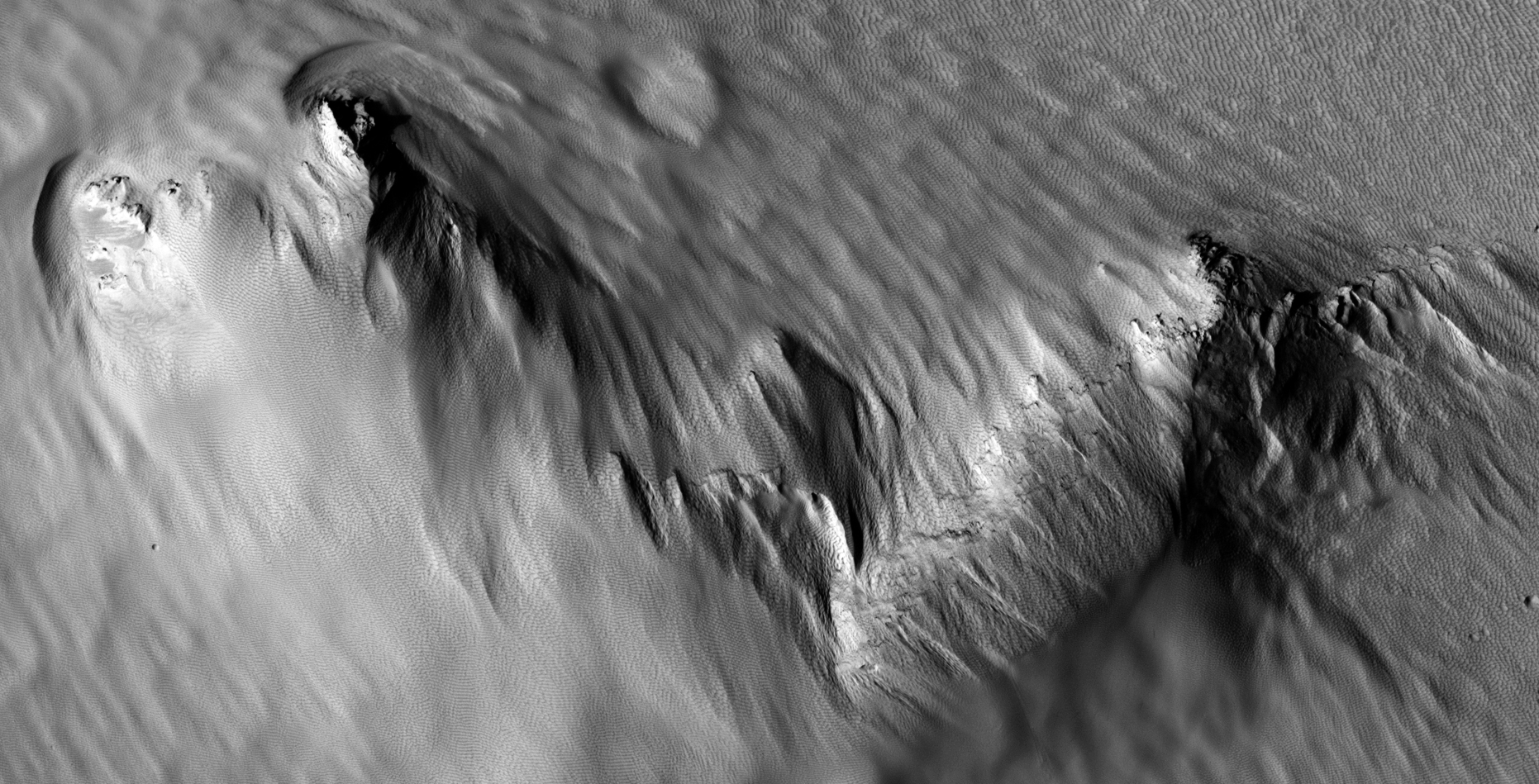
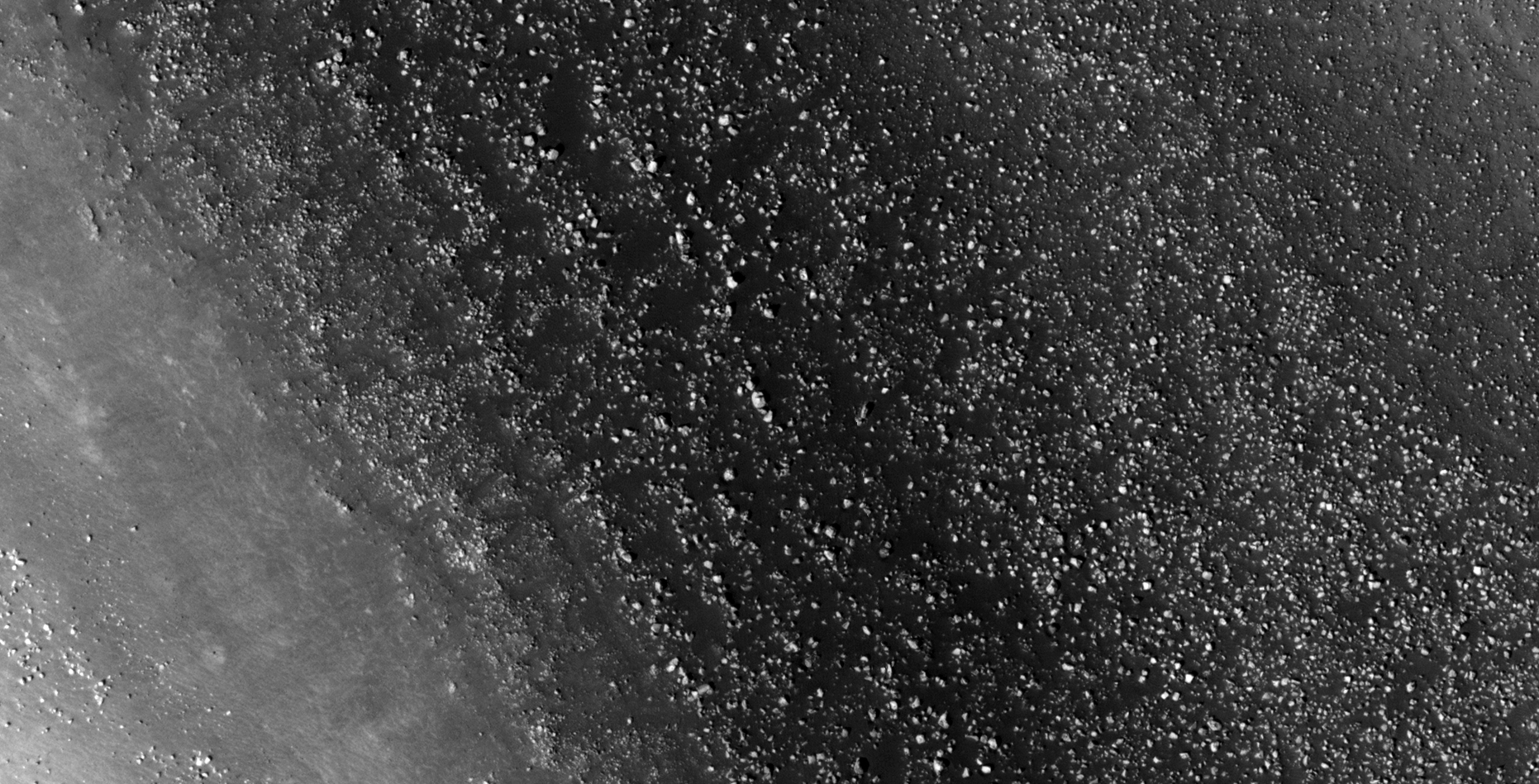
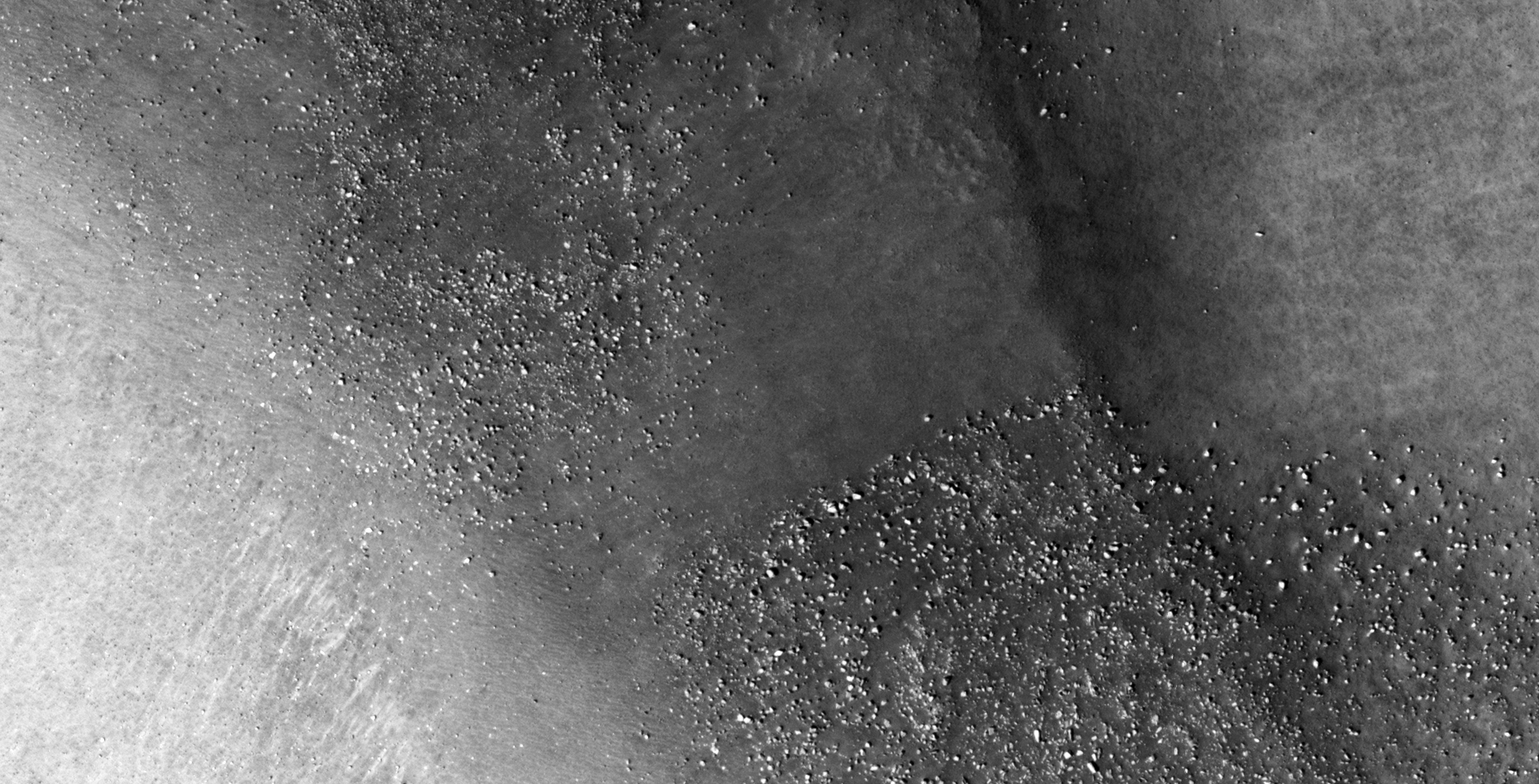
The photograph analyzed here (ESP_013864_1220) was taken by NASA’s Mars Reconnaissance Orbiter on 11 July 2009. NASA photograph description: ‘Sharp Boundary on Crater Floor.’
I discovered what may be further evidence of similar derelict/wrecked equipment or objects on Mars.
Similarities between the three objects:
The ‘bumper/scoop’ in front
An opening with a small part sticking out of the opening
A larger convex-shaped fuselage with small dome/sphere-like features on top
A small ‘winglette’ on the side
Measure approximately 10 metres in length
Could these perhaps be similar equipment types but different models (they have small differences)?
All three wrecks are located in the Southern hemisphere on Mars.
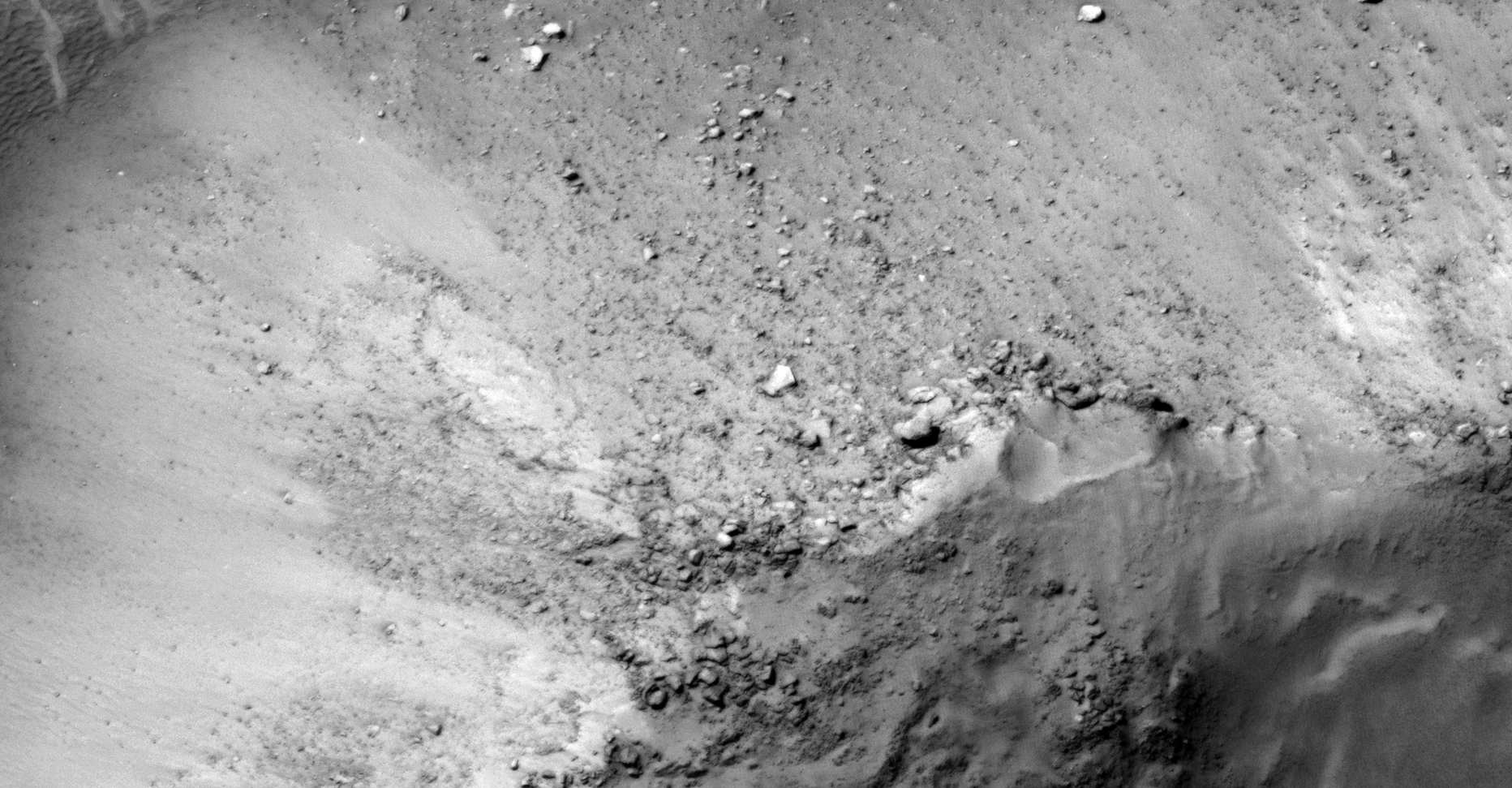
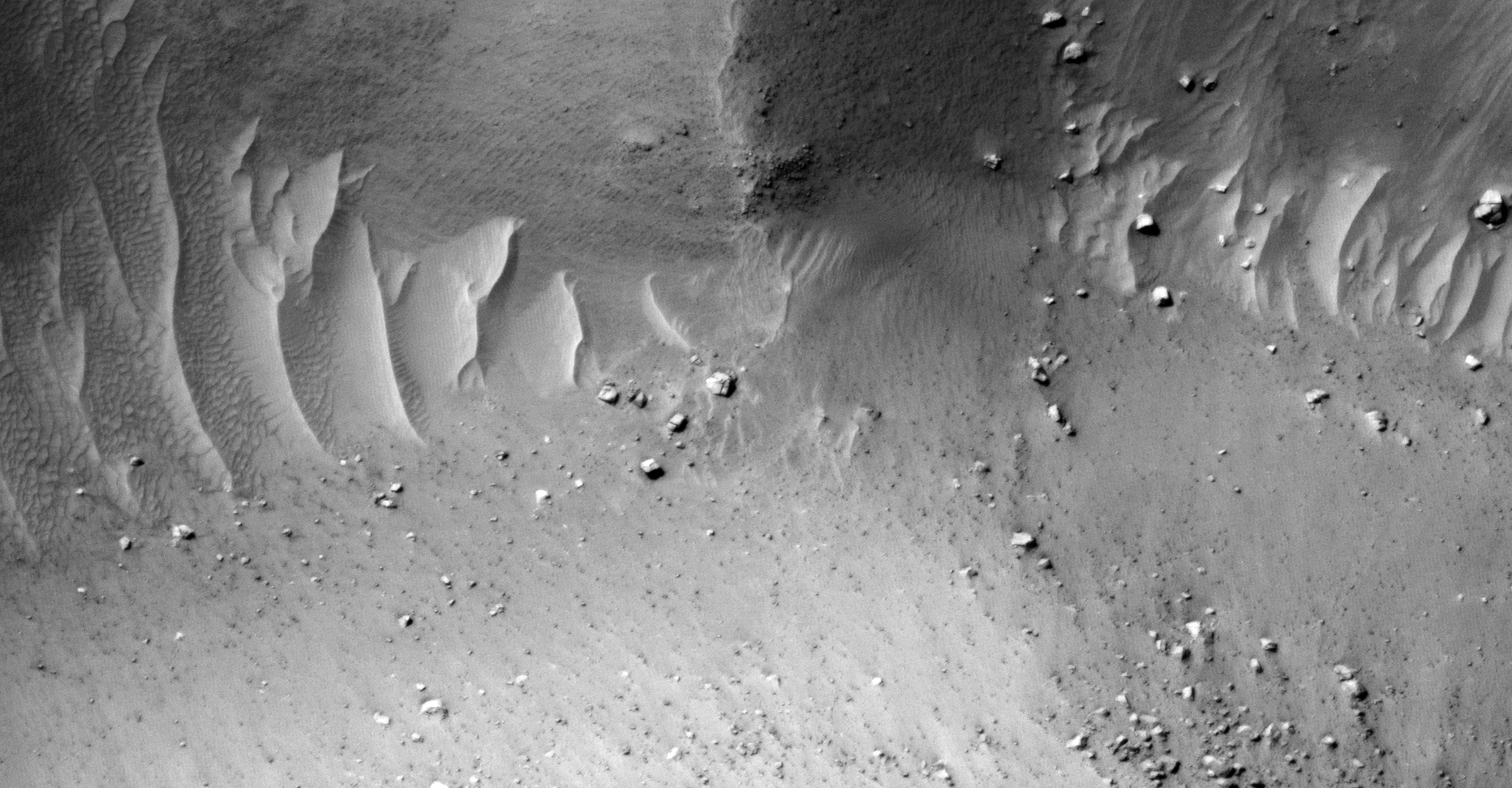
Wreckage South East of Douglass Crater (ESP_013864_1220) (click for larger image)Wreckage in Hunten Crater (ESP_028379_1405) (click for larger image)Wreckage in Electris Region (ESP_023929_1425) (click for larger image)The location of the three wrecks (click for larger image)
Images saved from within HiView or CTX viewer do not include image scale indicators. The image scale indicators I include in images are based on the official resolutions provided by NASA and although I strive to be as accurate as possible there may be slight deviations from the actual scale. Image scale indicators are included as a size approximation tool only.
Ley lines are mapped as accurately as possible using the limited information, data and mapping tools available at the time, therefore the ley lines may deviate from target sites by a few kilometres. Revisions may be made in the future as new, more precise information, data and mapping tools become available.
Many or all of the anomalies/artefacts covered in this presentation may be naturally occurring geological features caused by some type of geological processes, however due to the lack of specific information from the source we can only speculate whether these are all natural or some artificial in nature.
In cases where I say an anomaly looks like something I’m attempting to clarify what I see and not specifically that the anomaly is what I say it looks like.
My intention is only to share anomalies I’ve discovered on Mars and not to convince anyone that there is or was a civilization on Mars.
As Will Farrar from WhatsUpInTheSky says: “I see what I see, you see what you see.”
The photograph analyzed here (PSP_005860_1340) was taken by NASA’s Mars Reconnaissance Orbiter on 27 October 2007. NASA describes the photograph as ‘Erosional Features and Knob in Argyre Planitia.’
I discovered what appears to be further evidence of ancient broken megalithic blocks with knobs or smaller features on top and what may be wreckage.
There may even be a few underground entrance-ways shown, only speculating.
Layered metallic-type plates, one seems to have a small dome on top (click for larger image)Pile of debris/wreckage perhaps concealing an underground entrance-way (click for larger image)Three similar objects with smaller knobs of features on top (click for larger image)Wreckage consisting of two bent metallic-looking parts? (click for larger image)More wreckage? (click for larger image)Another object with smaller knob or feature on top (click for larger image)Wreckage consisting of multiple pieces with smaller domes or features on top (click for larger image)Another metallic-looking part with small features on top (click for larger image)Underground entrance-way with perhaps a long narrow ventilation slot on top? (click for larger image)
Images saved from within HiView or CTX viewer do not include image scale indicators. The image scale indicators I include in images are based on the official resolutions provided by NASA and although I strive to be as accurate as possible there may be slight deviations from the actual scale. Image scale indicators are included as a size approximation tool only.
Ley lines are mapped as accurately as possible using the limited information, data and mapping tools available at the time, therefore the ley lines may deviate from target sites by a few kilometres. Revisions may be made in the future as new, more precise information, data and mapping tools become available.
Many or all of the anomalies/artefacts covered in this presentation may be naturally occurring geological features caused by some type of geological processes, however due to the lack of specific information from the source we can only speculate whether these are all natural or some artificial in nature.
In cases where I say an anomaly looks like something I’m attempting to clarify what I see and not specifically that the anomaly is what I say it looks like.
My intention is only to share anomalies I’ve discovered on Mars and not to convince anyone that there is or was a civilization on Mars.
As Will Farrar from WhatsUpInTheSky says: “I see what I see, you see what you see.”
Although the so-called face and pyramids in Cydonia were discovered years ago they still feature in presentations and documentaries today. I’m sure you agree that it’s time for something new and refreshing.
Featured here are another face and pyramids I discovered just North of Gale crater where NASA is operating it’s Curiosity rover. Also featured are anomalies in three other area’s of interest.
The massive anomalies shown here include everything from a ‘face’ to pyramids, an ‘eye’ and other strange geometric structures. There are also multiple matching structures.
The following photographs taken by NASA’s Mars Reconnaissance Orbiter CTX Camera are analysed here:
G22_026771_2213_XI_41N009W
G01_018593_2214_XI_41N302W
P20_008753_1876_XN_07N211W
P22_009650_1772_XI_02S222W
P22_009821_1848_XI_04N211W
G22_026771_2213_XI_41N009W Anomalies:
The ‘Face’ and Pyramids in Cydonia (click for larger image)
P22_009650_1772_XI_02S222W Anomalies:
The ‘Face of Chewbacca’ (click for larger image)The ‘Face of Chewbacca’ – Actual size (click for larger image)Long narrow ‘Mesa’ out of place (click for larger image)The ‘Pistol’ – Zoomed out (not to scale) (click for larger image)Three sided Pyramid just North of the ‘Face of Chewbacca’ (click for larger image)Three sided Pyramid just North of the ‘Face of Chewbacca’ – Actual size (click for larger image)
G01_018593_2214_XI_41N302W Anomalies:
The ‘Eye of Horus’ (click for larger image)The ‘Eye of Horus’ – Zoomed in (click for larger image)
P20_008753_1876_XN_07N211W Anomalies:
Blocks, perhaps an ancient city in ruins? – Zoomed out (not to scale) (click for larger image)Long narrow cigar-shaped structure in front of flat top pyramidal structure (click for larger image)Three sided Pyramid with triangular entrance-way on the one side (click for larger image)Dome-shaped structure with rectangular entrance-way (click for larger image)‘The Reflector,’ a long narrow structure seemingly built to reflect sunlight (click for larger image)The ‘Pistol’ – Zoomed out (not to scale). Similar to the structure in P22_009650_1772_XI_02S222W (click for larger image)Almost perfect four sided Pyramid with smaller structure on one side, possible city ruins to the top right (click for larger image)Two Pyramids (click for larger image)
P22_009821_1848_XI_04N211W Anomalies:
‘The Horseman’ – Martian surface artwork, zoomed out (not to scale) (click for larger image)‘The Reflector,’ a long narrow structure seemingly built to reflect sunlight. Similar to the structure in P20_008753_1876_XN_07N211W (click for larger image)Artificial, out of place narrow ‘Mesa’ (click for larger image)Huge rectangular structure and/or mining operation. The side to the right seems machined/worked while a trench appears to have been dug along the top (click for larger image)Geometric/symmetrical multi-sided structure with a strange circular feature and trench on top (click for larger image)
Images saved from within HiView or CTX viewer do not include image scale indicators. The image scale indicators I include in images are based on the official resolutions provided by NASA and although I strive to be as accurate as possible there may be slight deviations from the actual scale. Image scale indicators are included as a size approximation tool only.
Ley lines are mapped as accurately as possible using the limited information, data and mapping tools available at the time, therefore the ley lines may deviate from target sites by a few kilometres. Revisions may be made in the future as new, more precise information, data and mapping tools become available.
Many or all of the anomalies/artefacts covered in this presentation may be naturally occurring geological features caused by some type of geological processes, however due to the lack of specific information from the source we can only speculate whether these are all natural or some artificial in nature.
In cases where I say an anomaly looks like something I’m attempting to clarify what I see and not specifically that the anomaly is what I say it looks like.
My intention is only to share anomalies I’ve discovered on Mars and not to convince anyone that there is or was a civilization on Mars.
As Will Farrar from WhatsUpInTheSky says: “I see what I see, you see what you see.”
The photograph analyzed here (ESP_012445_1880) was taken by NASA’s Mars Reconnaissance Orbiter on 23 March 2009. NASA describes the photograph as ‘Disrupted and Blocky Outcrop in Cerberus Palus.’
I discovered what appears to be further ancient megalithic ruins consisting of massive, broken megalithic blocks.
Furthermore it looks like the area consisted of artificially made islands inside a canal-type system.
There are also other weird anomalies including what looks like an eroded pyramid with only one side still relatively intact. There is also a square block consisting of nine small square blocks.
PS: I decided not to include close-up zooms of the anomalies because the HiRISE photograph is too ‘noisy,’ salt and pepper and thin interference lines.
Megalithic Ruins and Blocks (click for larger image)Megalithic Ruins and Blocks (click for larger image)Megalithic Ruins and Blocks (click for larger image)Megalithic Ruins and Blocks (click for larger image)Megalithic Ruins and Blocks (click for larger image)Megalithic Ruins and Blocks (click for larger image)Megalithic Ruins and Blocks (click for larger image)Megalithic Ruins and Blocks (click for larger image)Megalithic Ruins and Blocks (click for larger image)Megalithic Ruins and Blocks (click for larger image)Megalithic Ruins and Blocks (click for larger image)Megalithic Ruins and Blocks (click for larger image)Megalithic Ruins and Blocks (click for larger image)Megalithic Ruins and Blocks (click for larger image)Megalithic Ruins and Blocks (click for larger image)Megalithic Ruins and Blocks (click for larger image)Megalithic Ruins and Blocks (click for larger image)Megalithic Ruins and Blocks (click for larger image)
Images saved from within HiView or CTX viewer do not include image scale indicators. The image scale indicators I include in images are based on the official resolutions provided by NASA and although I strive to be as accurate as possible there may be slight deviations from the actual scale. Image scale indicators are included as a size approximation tool only.
Ley lines are mapped as accurately as possible using the limited information, data and mapping tools available at the time, therefore the ley lines may deviate from target sites by a few kilometres. Revisions may be made in the future as new, more precise information, data and mapping tools become available.
Many or all of the anomalies/artefacts covered in this presentation may be naturally occurring geological features caused by some type of geological processes, however due to the lack of specific information from the source we can only speculate whether these are all natural or some artificial in nature.
In cases where I say an anomaly looks like something I’m attempting to clarify what I see and not specifically that the anomaly is what I say it looks like.
My intention is only to share anomalies I’ve discovered on Mars and not to convince anyone that there is or was a civilization on Mars.
As Will Farrar from WhatsUpInTheSky says: “I see what I see, you see what you see.”
The photographs analyzed here (ESP_023929_1425 and ESP_028379_1405) were taken by NASA’s Mars Reconnaissance Orbiter on 04 September 2011 and 15 August 2012 respectively. Area’s photographs were taken: ‘Electris Region’ and ‘Hunten Crater’ respectively
I discovered what appears to be further evidence of matching derelict equipment or objects on Mars approximately 6000 km apart.
Similarities between both objects:
The ‘bumper/scoop’ in front
‘Arch’ feature on top with a small part sticking out of the opening
A larger convex-shaped fuselage
The one object is totally wrecked while the other is in more pristine condition.
Wreckage I in Hunten Crater (ESP_028379_1405) (click for larger image)Wreckage II in Electris Region (ESP_023929_1425) (click for larger image)Google Earth Mars showing location of wreckages (approx. 6000 km apart) (click for larger image)
Images saved from within HiView or CTX viewer do not include image scale indicators. The image scale indicators I include in images are based on the official resolutions provided by NASA and although I strive to be as accurate as possible there may be slight deviations from the actual scale. Image scale indicators are included as a size approximation tool only.
Ley lines are mapped as accurately as possible using the limited information, data and mapping tools available at the time, therefore the ley lines may deviate from target sites by a few kilometres. Revisions may be made in the future as new, more precise information, data and mapping tools become available.
Many or all of the anomalies/artefacts covered in this presentation may be naturally occurring geological features caused by some type of geological processes, however due to the lack of specific information from the source we can only speculate whether these are all natural or some artificial in nature.
In cases where I say an anomaly looks like something I’m attempting to clarify what I see and not specifically that the anomaly is what I say it looks like.
My intention is only to share anomalies I’ve discovered on Mars and not to convince anyone that there is or was a civilization on Mars.
As Will Farrar from WhatsUpInTheSky says: “I see what I see, you see what you see.”
The photograph analyzed here (ESP_023929_1425) was taken by NASA’s Mars Reconnaissance Orbiter on 04 September 2011. NASA describes the photographs as ‘Remnant of Unconformable Deposit in Electris.’
I discovered what appears to be further ancient megalithic ruins consisting of massive, broken megalithic blocks.
Some structures are still relatively intact and show a few blocks that have become dislodged.
Again, there are multiple anomalies that look like wrecked craft, damaged machinery or tech, underground entrance-ways and pieces of sculptures, even what look like a giant hatch.
Are these ancient ruins built by a civilization that lived on Mars in the distant past or were these structures formed through a natural geological processes?
To quote NASA: ‘One goal of this observation is to try to determine the origin of what’s called the ‘mantling deposit.’ How was this deposit placed here?’
Due to the fact that I have discovered multiple sites on Mars with similar matching megalithic blocks and similar objects I speculate these ancient ruins are artificial in nature.
Layered/stepped megalithic blocks/slabs or some type of technology (click for larger image)Layered/stepped megalithic block/s (click for larger image)Smooth megalithic block with rounded edge (click for larger image)Layered/stepped megalithic block or some type of metallic-looking technology (click for larger image)Layered/stepped megalithic blocks/slabs or some type of metallic-looking technology (click for larger image)Metallic-looking plate partially buried with small symmetrical parts on top (click for larger image)Megalithic slab or piece of metallic-looking technology (click for larger image)Megalithic slabs or pieces of metallic-looking technology (click for larger image)Metallic-looking technology, perhaps some type of wrecked craft (click for larger image)Layered/stepped megalithic block/s or slabs or some type of technology or wrecked craft (click for larger image)Layered/stepped megalithic blocks/slabs or some type of technology (click for larger image)Symmetrical megalithic block or some type of technology (click for larger image)Partially buried megalithic block (click for larger image)Layered/stepped megalithic blocks/slabs or some type of technology (click for larger image)Megalithic block (click for larger image)Megalithic block with smaller step carved into one corner (click for larger image)Layered/stepped megalithic blocks/slabs or some type of metallic-looking technology (click for larger image)Bent metallic-looking plate, perhaps underground entrance-way (click for larger image)Strange shaped block, perhaps a piece from a giant sculpture (click for larger image)Megalithic slabs or some type of metallic-looking technology, perhaps underground entrance-way (click for larger image)Rectangular object with what look like two holes or dark spots on one side (click for larger image)Layered/stepped megalithic blocks/slabs or some type of metallic-looking plates or technology (click for larger image)Partially buried metallic-looking technology, perhaps some type of wrecked craft (click for larger image)Megalithic block/slab with smaller knob or feature on top (click for larger image)Layered/stepped megalithic blocks/slabs or some type of metallic-looking technology (click for larger image)Megalithic block in the shape of a cube (click for larger image)Layered/stepped megalithic blocks/slabs or some type of metallic-looking technology (click for larger image)Megalithic block/slab with smaller knobs or features on top (click for larger image)Narrow megalithic slab (click for larger image)Two exposed, inter-locking megalithic blocks with knobs or smaller features on top (click for larger image)Molded object, perhaps from a sculpture (click for larger image)Megalithic blocks/slabs or some type of metallic-looking plates or technology (click for larger image)Large megalithic block with a smaller rectangular block on top (click for larger image)Exposed, inter-locking megalithic blocks (click for larger image)Narrow rectangular parts on opposite sides to a cylindrical object, perhaps a wrecked craft or some type of technology (click for larger image)Stepped/layered piece with smaller knobs or features on top (click for larger image)Two megalithic blocks (click for larger image)Part of a sculpture or some kind of destroyed technology (click for larger image)Megalithic block with multiple smaller features to the left side, perhaps part of a sculpture. It appears the piece lying next to it broke off (click for larger image)Megalithic blocks in the shape of a cubes (click for larger image)Megalithic slabs (click for larger image)Megalithic blocks (click for larger image)Triangular object partially buried in sand (click for larger image)Partially buried megalithic block or technology, note the oblong feature with smaller dome on the side (click for larger image)Megalithic block with multiple smaller features, perhaps part of a sculpture (click for larger image)Rectangular megalithic block (click for larger image)Megalithic block with knob or smaller feature on top (click for larger image)Exposed, inter-locking megalithic blocks (click for larger image)Megalithic blocks with knobs or smaller features on top (click for larger image)Multiple stacked megalithic blocks/slabs (click for larger image)Could this be some type of hatch or wrecked craft? (click for larger image)Hollow object? There seems to be a rounded opening on the one side (click for larger image)Broken sculpture pieces or perhaps smashed technology? (click for larger image)Megalithic block in the shape of a cube (click for larger image)Megalithic blocks (click for larger image)Broken sculpture piece, stepper/layered megalithic block or perhaps smashed technology? (click for larger image)Object in the shape of a heart or leaf, perhaps a sculpture piece? (click for larger image)Narrow megalithic block/slab (click for larger image)Megalithic block with knobs or smaller features on top (click for larger image)Narrow megalithic block/slab (click for larger image)Narrow megalithic block/slab (click for larger image)
Images saved from within HiView or CTX viewer do not include image scale indicators. The image scale indicators I include in images are based on the official resolutions provided by NASA and although I strive to be as accurate as possible there may be slight deviations from the actual scale. Image scale indicators are included as a size approximation tool only.
Ley lines are mapped as accurately as possible using the limited information, data and mapping tools available at the time, therefore the ley lines may deviate from target sites by a few kilometres. Revisions may be made in the future as new, more precise information, data and mapping tools become available.
Many or all of the anomalies/artefacts covered in this presentation may be naturally occurring geological features caused by some type of geological processes, however due to the lack of specific information from the source we can only speculate whether these are all natural or some artificial in nature.
In cases where I say an anomaly looks like something I’m attempting to clarify what I see and not specifically that the anomaly is what I say it looks like.
My intention is only to share anomalies I’ve discovered on Mars and not to convince anyone that there is or was a civilization on Mars.
As Will Farrar from WhatsUpInTheSky says: “I see what I see, you see what you see.”
The photographs analyzed here (P13_006274_1853_XN_05N201W and ESP_020541_1860) were taken by NASA’s Mars Reconnaissance Orbiter on 28 November 2007 and 14 December 2010 respectively. NASA describes the photographs as ‘Cerberus Tholi region’ and ‘Ridges and Polygonal Terrain in Elysium Planitia’ respectively.
I discovered what looks like another ancient/derelict pyramidal structure on a vast Martian plain covered in sand and dust.
It’s not clear whether this might be an eroded pyramid or a slanted, partially buried, megalithic-block lying on the Martian surface that was pushed up through the surface leaving the smooth flat sides, eroded over time.
Both the long sides of the large triangle are approximately 600 metres in length with the short side 320 metres in length.
There also seems to be a large concave circular feature with a diameter of approximately 160 metres on the one side.
This is just another example of the many pyramid-shaped structures scattered across the planet.
Other anomalies found in the HiRISE photograph (ESP_020541_1860) show signs of recent activity on the surface, these include what look like open pit mining operations and unusual geometric shapes being carved into the surface.
Context camera images:
Derelict Pyramidal Structure found on Plains of Mars (P13_006274_1853_XN_05N201W – Zoomed Out) (click for larger image)Derelict Pyramidal Structure found on Plains of Mars (P13_006274_1853_XN_05N201W – Closer View) (click for larger image)Derelict Pyramidal Structure found on Plains of Mars (P13_006274_1853_XN_05N201W – Actual Size) (click for larger image)
There is another rather strange geometric structure located to the North above the Pyramidal structure, note the geometry and symmetry in the shape:
Strange geometric structure to the North (P13_006274_1853_XN_05N201W – Actual Size) (click for larger image)
The strange geometric structures above feature all over the Martian surface, here is an example of a multi-sided pyramidal structure I discovered in another area of Mars:
Multi-sided pyramidal structure (ESP_025752_1395 – Actual Size) (click for larger image)
HiRISE camera images:
Derelict Pyramidal Structure found on Plains of Mars (ESP_020541_1860 – Zoomed Out) (click for larger image)
Other anomalies found in the HiRISE photograph:
Generally craters/pits in area are filled with sand to the brim, however there are a few holes/surface features which appear to be disturbed and/or formed recently and might be artificial in nature.
The following images show typical, ‘standard’ craters/pits filled with sand:
Typical, ‘standard’ crater/pit filled with sand (ESP_020541_1860) (click for larger image)Typical, ‘standard’ crater/pit filled with sand (ESP_020541_1860) (click for larger image)
Compared to the two examples above, the following craters/pits or holes do not look natural, thus I speculate these holes were produced through recent activity, perhaps open pit mining, etc.:
Sign of recent activity on the surface (ESP_020541_1860) (click for larger image)Sign of recent activity on the surface (ESP_020541_1860) (click for larger image)Sign of recent activity on the surface (ESP_020541_1860) (click for larger image)
Then there’s this one, another triangular geometric shape ‘carved’ into the surface:
Mine or Strange Geometric Shape Carved Into Martian Surface (ESP_020541_1860) (click for larger image)
The anomaly above reminds me of a similar triangular geometric shape I discovered ‘carved’ into the surface in another area of Mars:
Mine or Strange Geometric Shape Carved Into Martian Surface (ESP_020286_2350) (click for larger image)
Images saved from within HiView or CTX viewer do not include image scale indicators. The image scale indicators I include in images are based on the official resolutions provided by NASA and although I strive to be as accurate as possible there may be slight deviations from the actual scale. Image scale indicators are included as a size approximation tool only.
Ley lines are mapped as accurately as possible using the limited information, data and mapping tools available at the time, therefore the ley lines may deviate from target sites by a few kilometres. Revisions may be made in the future as new, more precise information, data and mapping tools become available.
Many or all of the anomalies/artefacts covered in this presentation may be naturally occurring geological features caused by some type of geological processes, however due to the lack of specific information from the source we can only speculate whether these are all natural or some artificial in nature.
In cases where I say an anomaly looks like something I’m attempting to clarify what I see and not specifically that the anomaly is what I say it looks like.
My intention is only to share anomalies I’ve discovered on Mars and not to convince anyone that there is or was a civilization on Mars.
As Will Farrar from WhatsUpInTheSky says: “I see what I see, you see what you see.”
The photographs analyzed here (B05_011413_1790_XN_01S113W and PSP_002671_1790) were taken by NASA’s Mars Reconnaissance Orbiter on 01 January 2009 and 20 February 2007 respectively. NASA describes the photographs as ‘Ride-along with HiRISE’ and ‘Possible Cinder Cone on the Southern Flank of Pavonis Mons’ respectively.
I discovered what looks like an ancient ruin on Mars consisting of two opposing chevron-type structures/walls. The side of each wall measures approximately 480 metres in length with a gap of 180 metres and 350 metres respectively between the two structures/walls.
Could these two chevron shapes be the remnants of a square structure/walled-in area that collapsed in the distant past?
These structures remind me of a similar structure featured in my ‘Giant Buried Structures found in Renaudot Crater on Mars’ Blog Post and YouTube video.
Ancient Chevron-Shaped Ruin found on Mars (B05_011413_1790_XN_01S113W – Zoomed Out) (click for larger image)Ancient Chevron-Shaped Ruin found on Mars (B05_011413_1790_XN_01S113W – Closer View) (click for larger image)Ancient Chevron-Shaped Ruin found on Mars (B05_011413_1790_XN_01S113W – Actual Size) (click for larger image)Ancient Chevron-Shaped Ruin found on Mars (PSP_002671_1790 – Zoomed Out) (click for larger image)Ancient Chevron-Shaped Ruin found on Mars (PSP_002671_1790 – Top Chevron) (click for larger image)Ancient Chevron-Shaped Ruin found on Mars (PSP_002671_1790 – Bottom Chevron) (click for larger image)
Images saved from within HiView or CTX viewer do not include image scale indicators. The image scale indicators I include in images are based on the official resolutions provided by NASA and although I strive to be as accurate as possible there may be slight deviations from the actual scale. Image scale indicators are included as a size approximation tool only.
Ley lines are mapped as accurately as possible using the limited information, data and mapping tools available at the time, therefore the ley lines may deviate from target sites by a few kilometres. Revisions may be made in the future as new, more precise information, data and mapping tools become available.
Many or all of the anomalies/artefacts covered in this presentation may be naturally occurring geological features caused by some type of geological processes, however due to the lack of specific information from the source we can only speculate whether these are all natural or some artificial in nature.
In cases where I say an anomaly looks like something I’m attempting to clarify what I see and not specifically that the anomaly is what I say it looks like.
My intention is only to share anomalies I’ve discovered on Mars and not to convince anyone that there is or was a civilization on Mars.
As Will Farrar from WhatsUpInTheSky says: “I see what I see, you see what you see.”
The photographs analyzed here (F16_041919_2305_XN_50N278W and ESP_042486_2305) was taken by NASA’s Mars Reconnaissance Orbiter on 2015-07-06 and 20 August 2015 respectively. NASA describes the photographs as ‘Ride-along with HiRISE’ and ‘Interesting Feature on Northern Plains’ respectively.
I discovered what looks like another massive megalithic block or structure buried on Mars. It measures approximately 5 km long by 800 metres wide.
This buried object is similar to the one I feature in my ‘The Star Trek 2001 Mars Rendezvous – An Ode to Roddenberry and Clarke’ video.
Partially Buries Megalithic Block or Structure (F16_041919_2305_XN_50N278W – Zoomed Out) (click for larger image)Partially Buries Megalithic Block or Structure (F16_041919_2305_XN_50N278W – Closer View) (click for larger image)Partially Buries Megalithic Block or Structure (F16_041919_2305_XN_50N278W – Actual Size) (click for larger image)Partially Buries Megalithic Block or Structure (ESP_042486_2305 – Top Part) (click for larger image)Partially Buries Megalithic Block or Structure (ESP_042486_2305 – Middle Part), note the smaller objects which include a disc-shaped object with a smaller feature in the center of the object (click for larger image)Partially Buries Megalithic Block or Structure (ESP_042486_2305 – Bottom Part) (click for larger image)
Images saved from within HiView or CTX viewer do not include image scale indicators. The image scale indicators I include in images are based on the official resolutions provided by NASA and although I strive to be as accurate as possible there may be slight deviations from the actual scale. Image scale indicators are included as a size approximation tool only.
Ley lines are mapped as accurately as possible using the limited information, data and mapping tools available at the time, therefore the ley lines may deviate from target sites by a few kilometres. Revisions may be made in the future as new, more precise information, data and mapping tools become available.
Many or all of the anomalies/artefacts covered in this presentation may be naturally occurring geological features caused by some type of geological processes, however due to the lack of specific information from the source we can only speculate whether these are all natural or some artificial in nature.
In cases where I say an anomaly looks like something I’m attempting to clarify what I see and not specifically that the anomaly is what I say it looks like.
My intention is only to share anomalies I’ve discovered on Mars and not to convince anyone that there is or was a civilization on Mars.
As Will Farrar from WhatsUpInTheSky says: “I see what I see, you see what you see.”
The photograph analyzed here (ESP_025782_2020) was taken by NASA’s Mars Reconnaissance Orbiter HiRISE Camera on 26 January 2012. NASA describes the photographs as ‘Tilted and Layered Bedrock Blocks in a Large Crater inside Becquerel Crater.’
I discovered what looks like Martian artwork depicting a creepy guy showing his head with two closed eyes, open mouth and two shoulders.
Something out of a horror movie … ‘The freaky zombie guy from Mars frozen in the sands of time.’
I’ll do a follow up video featuring the other anomalies I found in this photograph in the near future. In the meantime I thought I’d show you this interesting feature for the fun of it.
The freaky zombie guy from Mars frozen in the sands of time (click for larger image)The freaky zombie guy from Mars frozen in the sands of time – Rotated (click for larger image)
Images saved from within HiView or CTX viewer do not include image scale indicators. The image scale indicators I include in images are based on the official resolutions provided by NASA and although I strive to be as accurate as possible there may be slight deviations from the actual scale. Image scale indicators are included as a size approximation tool only.
Ley lines are mapped as accurately as possible using the limited information, data and mapping tools available at the time, therefore the ley lines may deviate from target sites by a few kilometres. Revisions may be made in the future as new, more precise information, data and mapping tools become available.
Many or all of the anomalies/artefacts covered in this presentation may be naturally occurring geological features caused by some type of geological processes, however due to the lack of specific information from the source we can only speculate whether these are all natural or some artificial in nature.
In cases where I say an anomaly looks like something I’m attempting to clarify what I see and not specifically that the anomaly is what I say it looks like.
My intention is only to share anomalies I’ve discovered on Mars and not to convince anyone that there is or was a civilization on Mars.
As Will Farrar from WhatsUpInTheSky says: “I see what I see, you see what you see.”